Outdoor Adventures & Nature: Exploring Morocco’s Wild Side
Morocco’s Summer Festivals 2026 offer one of the most rewarding reasons to time a visit for June, July, or August, when cities and towns across the country come alive with music, dance, and centuries-old traditions — from Gnaoua trance rhythms echoing through Essaouira’s medina to the massive open-air concerts of Rabat’s Mawazine. This guide covers the major summer festivals worth planning around, what each one involves, and the practical details you need to attend one — or several.
Exact dates are typically confirmed by organizers only a few months in advance, so this article focuses on historical timing patterns, locations, and character rather than fixed 2026 calendar dates. Always check the official festival source closer to your travel dates before booking flights or accommodation.
Morocco’s festival calendar is dense enough that even travelers without a specific event in mind will often stumble into live music or public celebration between June and August.
Why Plan Around Morocco's Summer Festivals 2026
Summer is already Morocco’s high season for coastal and mountain travel, and the festival calendar adds another layer of appeal on top of that. Unlike festivals designed primarily for tourists, most of Morocco’s major summer events are homegrown cultural institutions that draw huge local crowds — Mawazine alone has historically attracted well over two million attendees across its multi-day run in Rabat. That scale means visitors get an authentic look at contemporary Moroccan cultural life, not a staged performance.
The festivals also showcase just how musically diverse Morocco is. Gnaoua music, rooted in West African spiritual traditions brought north centuries ago, sounds nothing like the Amazigh (Berber) folk music celebrated at mountain moussems, which in turn differs sharply from the pop, hip-hop, and international acts booked at city-wide festivals like Mawazine. Attending even one or two of these events gives travelers a much broader sense of Moroccan identity than a typical sightseeing itinerary alone.
Finally, festival season tends to concentrate cultural energy into specific cities on specific dates, which makes for efficient trip planning. Rather than guessing where to be for a lively atmosphere, the festival calendar effectively tells you.
For travelers building an itinerary from outside Morocco, this also means festival timing can act as a natural anchor for a broader route. A trip could reasonably be structured around arriving in Essaouira for Gnaoua, then working inland toward Marrakech and the Atlas Mountains once the festival wraps, or starting in Rabat for Mawazine before heading south along the coast. Because most of these events are concentrated in a handful of well-connected cities, they integrate fairly naturally into a wider Morocco itinerary rather than requiring a separate, festival-only trip.
Our Morocco day trips make it easy to fill the days between festival dates with a mountain hike, waterfall visit, or desert excursion.
A Region-by-Region Guide to Morocco's Major Summer Festivals
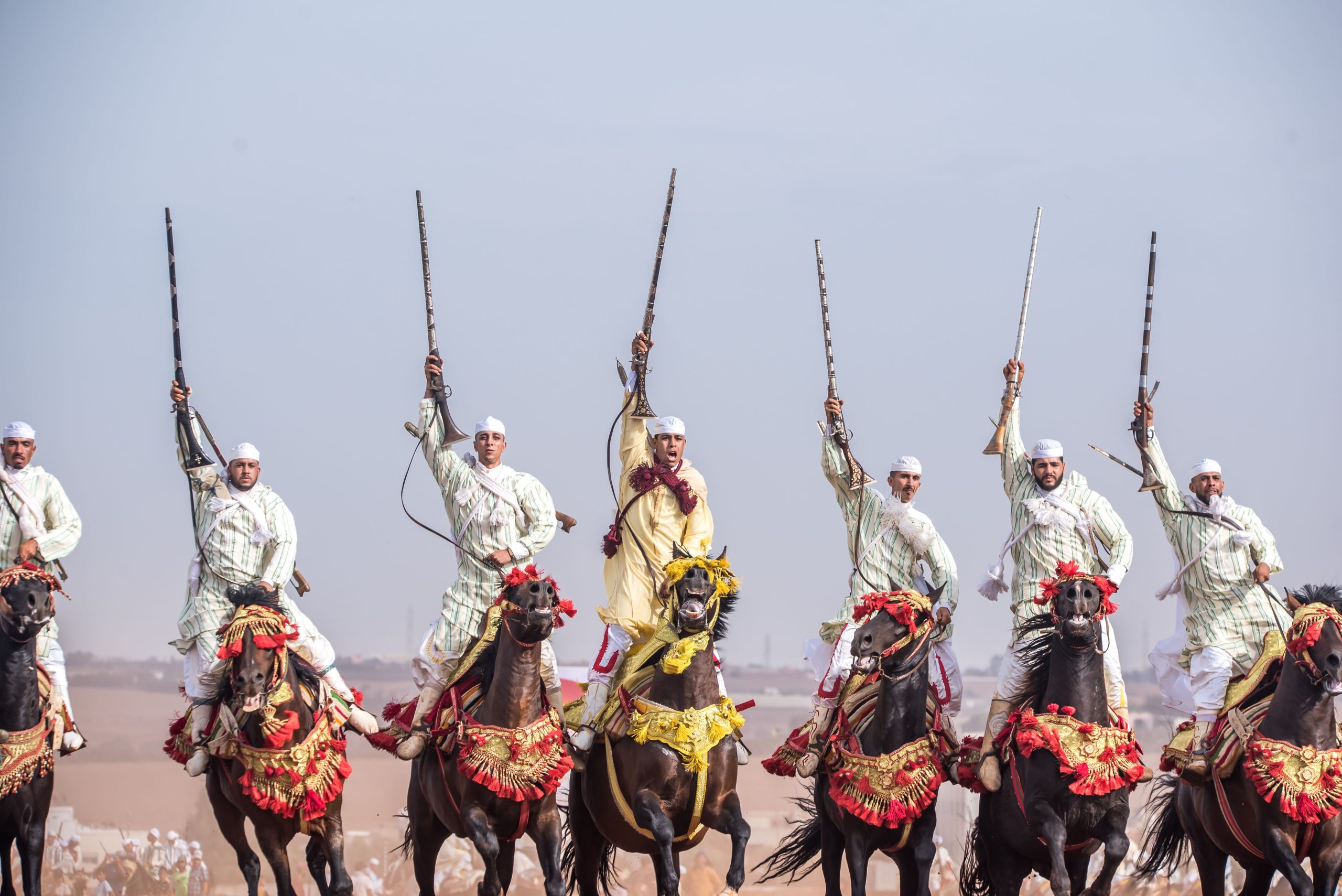
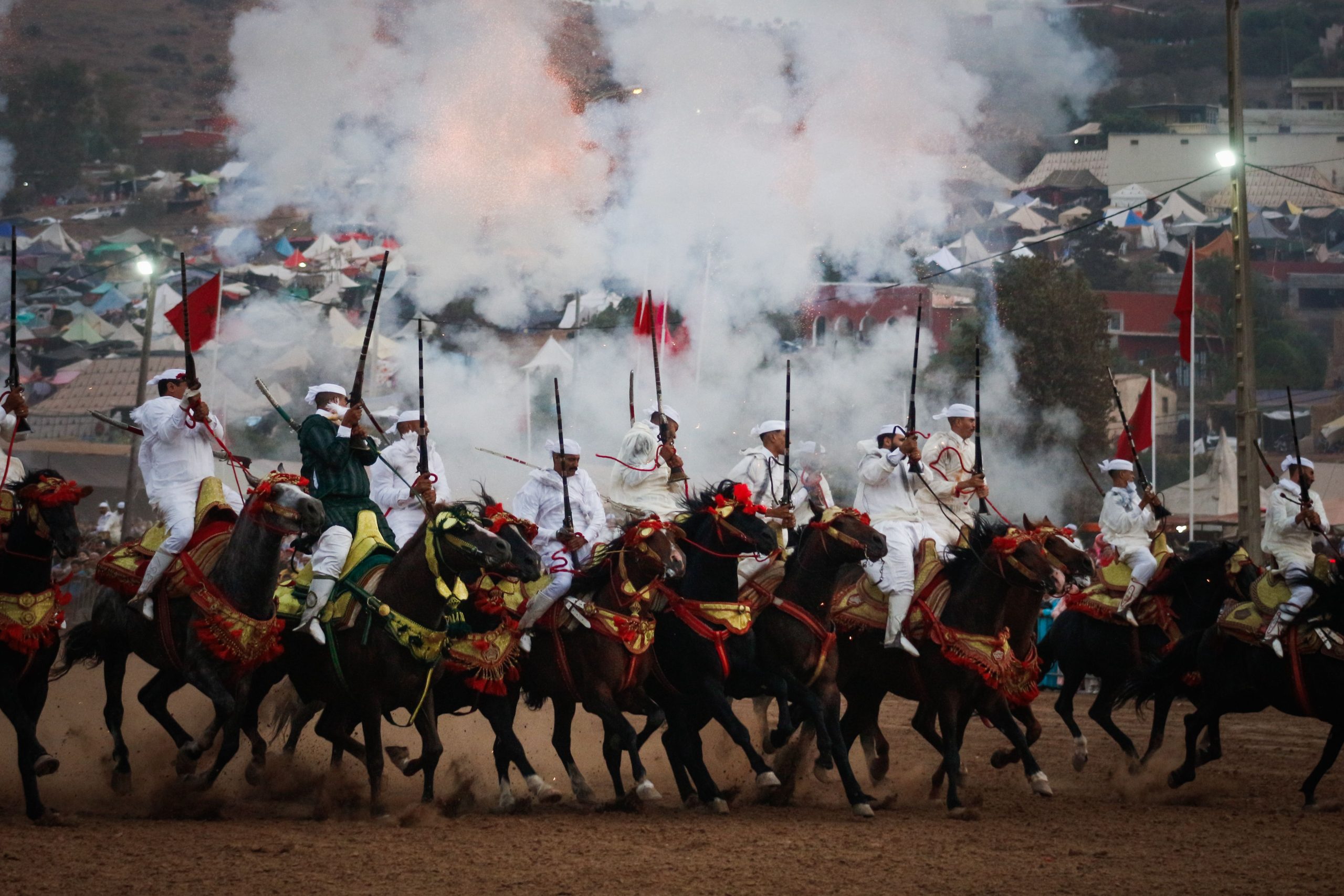
Gnaoua World Music Festival — Essaouira
Held annually in Essaouira, typically in June, the Gnaoua World Music Festival is one of Morocco’s best-known cultural events internationally. It centers on Gnaoua music, a spiritual musical tradition brought to Morocco generations ago, built around the guembri (a three-stringed bass instrument), iron castanets called qraqeb, and call-and-response vocals originally used in healing ceremonies. The modern festival pairs Gnaoua maalems (master musicians) with jazz, blues, and international artists in collaborative performances staged across several outdoor venues in Essaouira’s fortified medina, with most concerts free and open to the public. The coastal setting — Essaouira’s Atlantic ramparts and narrow blue-and-white streets — adds significantly to the atmosphere.
Escape the city, one day at a time
From cascading waterfalls to hidden valleys and laid-back coastal towns, Morocco’s best surprises are just a day trip away. Browse our full lineup and find the one that fits your itinerary.
Mawazine — Rhythms of the World — Rabat
Mawazine, usually held in June, is Morocco’s largest music festival and one of the biggest in the world by attendance. Staged across multiple venues in the capital, Rabat, it mixes major international pop and hip-hop acts with Moroccan and Arab stars, plus dedicated stages for traditional and world music. Most Mawazine concerts are free, funded through sponsorship, which is part of why attendance figures are so large. For travelers, this means big crowds and lively citywide energy, but it also means less need to plan far in advance for concert tickets compared to typical paid festivals abroad.
Timitar Festival — Agadir
Timitar, generally held in July in the coastal city of Agadir, focuses specifically on Amazigh (Berber) music and culture, alongside international guest artists. The name itself comes from the Tamazight word for “signs” or “traces,” reflecting the festival’s mission to celebrate Amazigh identity through music. It’s a strong choice for travelers interested in Morocco’s indigenous culture specifically, rather than the broader pan-Arab and international programming found at larger festivals like Mawazine. Agadir’s setting also makes Timitar an easy festival to combine with beach time, since the city is one of Morocco’s principal coastal resort destinations, with a long sandy beachfront that stays active well beyond the festival’s evening concert hours.
Marrakech Popular Arts Festival
Usually staged in July in Marrakech’s Jemaa el-Fnaa square and El Badi Palace, this festival focuses on traditional Moroccan folk arts — regional dance troupes, musicians, and performers from across the country’s different regions, each showcasing distinct local traditions. It’s one of the longest-running festivals in Morocco and offers a more traditional, less internationally programmed counterpart to the big music festivals. Performances often include Ahwach dance from the Souss region, Reggada from the eastern Rif, and Gnaoua ensembles alongside dozens of other regional troupes, giving visitors a condensed overview of Morocco’s folk traditions in a single event rather than needing to travel to each region individually to see them.
Choosing a Base City for Festival Season
With festivals spread across several cities, deciding where to base yourself can shape the rest of your trip. Essaouira works well for travelers who want a smaller, walkable city with a strong coastal atmosphere and easy access to nearby beaches between festival days. Rabat, as the capital, offers more infrastructure and transport connections, useful if Mawazine is a priority or if you’re planning to continue on to other northern cities like Fes or Chefchaouen. Marrakech remains the most convenient hub for travelers who also want quick access to the High Atlas Mountains or a desert extension, since it functions as Morocco’s primary tourism gateway regardless of festival timing. Agadir, meanwhile, suits travelers prioritizing beach time alongside Timitar, given its long stretch of Atlantic coastline and well-developed resort infrastructure.
Regional Moussems and Local Summer Festivals
Beyond the major national festivals, summer is also moussem season in many parts of Morocco — local religious and cultural gatherings, often centered on a saint’s shrine or a harvest tradition, that combine spiritual observance with markets, music, and community celebration. These are typically smaller and less internationally publicized than events like Mawazine, but they offer some of the most genuine, unfiltered cultural experiences available to travelers willing to venture beyond the major cities. Local tourism offices and guides are usually the best source for which moussems are active in a given region during your travel dates.
Tangier’s Summer Cultural Season
Tangier, at Morocco’s northern tip, hosts a range of smaller cultural and music events through the summer months, benefiting from its position as a bridge between Europe and Africa and its long history as an artistic and literary hub. Programming varies year to year and tends to be less centralized than a single flagship festival, spanning outdoor concerts, film screenings, and cultural evenings tied to the city’s cinémathèque and cultural centers. For travelers already routing through northern Morocco — particularly those combining a Morocco trip with a stop in southern Spain via the Strait of Gibraltar ferry — Tangier’s summer cultural calendar is worth checking alongside the city’s more established historical and culinary attractions.
Things to Know Before You Go
Timing and confirmation. Festival dates in Morocco are generally announced a few months ahead of the event, and can shift year to year. If a specific festival is central to your trip, build in flexibility and confirm dates directly with the festival organizers or a local operator before locking in flights.
Crowds and accommodation. Festival periods, especially Mawazine in Rabat and Gnaoua in Essaouira, draw large crowds and can significantly affect hotel availability and pricing in the host city. Booking accommodation well in advance is strongly recommended if your trip coincides with a major festival.
Free versus ticketed events. Many of Morocco’s largest festivals, including most Mawazine and Gnaoua performances, are free and open-air, which changes the planning calculus compared to ticketed festivals elsewhere — the main logistical challenge is arriving early enough to secure a good viewing spot for major headline acts, not securing tickets in advance.
Heat. Summer temperatures in Morocco’s interior cities, including Marrakech and Rabat, can be intense, particularly in July and August. Coastal festival cities like Essaouira and Agadir benefit from Atlantic breezes and tend to be noticeably cooler than inland destinations during the same period.
Combining festivals with other travel. Because Morocco’s major summer festivals are spread across different cities — Essaouira on the coast, Rabat in the north, Agadir further south — it’s worth thinking about festival timing alongside a broader itinerary rather than building an entire trip around a single event.
Photography and etiquette at moussems. At regional moussems and smaller religious-cultural gatherings, photography rules are often more informal than at large ticketed festivals, but it’s still good practice to ask before photographing individuals up close, particularly during ceremonial or spiritual moments. Large public concerts at events like Mawazine and Gnaoua generally have no restrictions on personal photography of the crowd or stage from a normal viewing distance.
Highlights and Activities
- Free open-air concerts at Mawazine and Gnaoua, ranging from major international headliners to traditional Moroccan and Amazigh acts performing on smaller dedicated stages.
- Medina wandering during festival hours, when Essaouira’s and Marrakech’s old towns take on a particularly lively, celebratory atmosphere well beyond the official festival venues.
- Late-night street performances, especially around Jemaa el-Fnaa during the Marrakech Popular Arts Festival, where regional troupes perform outside the formal festival program as well.
- Local food stalls and pop-up markets, which spring up around most major festival venues and are often as much a part of the experience as the music itself.
- Regional moussems, offering a quieter, more community-oriented alternative for travelers who want a genuine cultural experience away from the largest crowds.
If you’d like a festival woven into a broader Morocco itinerary, xploremorocco.com can help you plan travel dates around major cultural events without sacrificing time in the mountains, desert, or coast.
Practical Travel Tips
What to bring. Light, breathable clothing is essential for outdoor festival attendance in summer heat, along with a hat, sunscreen, and a refillable water bottle. For evening events, a light layer is still worth packing, since coastal cities like Essaouira can cool down noticeably after sunset.
Budgeting. Because most major festival concerts are free, the primary festival-related costs are accommodation, transport between cities, and food — all of which tend to rise during peak festival dates in the host city. Booking early is the most effective way to manage costs.
Getting around. If your trip includes more than one festival city, factor in travel time between them — Essaouira, Rabat, Marrakech, and Agadir are all several hours apart by road or rail, and festival-period traffic and demand for transport can add extra time.
Language and etiquette. Arabic and Tamazight are the main local languages, with French widely spoken and understood in urban festival settings. Modest dress is appreciated when moving through medinas and more traditional neighborhoods, even during a lively festival atmosphere.
Staying flexible. Given how much festival scheduling can shift, especially for smaller regional moussems, building a day or two of flexibility into your itinerary makes it easier to catch an event that only gets confirmed closer to the date.
Health and crowd safety. Large free festivals like Mawazine can draw dense crowds, particularly near main stages during headline performances. Staying hydrated in summer heat, keeping valuables secure in crowded settings, and agreeing on a meeting point in advance if traveling in a group are all sensible precautions for any large open-air event in Morocco.
FAQ's about Morocco's Summer Festivals 2026
Do I need to be an experienced hiker to enjoy outdoor activities in Morocco?
No. While routes like the Toubkal summit trek require reasonable fitness and some hiking experience, the vast majority of outdoor experiences in Morocco — valley walks, gorge visits, desert excursions, and village day trips — are accessible to travelers with little or no hiking background.
Is it safe to explore Morocco's mountains and desert independently?
Independent travel is possible in some areas, but hiring a licensed local guide is recommended for mountain treks and remote desert routes, both for safety and because trail conditions, weather, and regulations can change. Guides also provide valuable cultural and historical context that’s easy to miss traveling alone.
What is the best season for a Sahara Desert trip versus a mountain trek?
Broadly, autumn through spring (roughly October to April) works well for the Sahara, avoiding the extreme summer heat, while the Atlas Mountains are most comfortable in spring and autumn, with winter bringing snow to higher elevations. If your trip spans both regions, shoulder-season travel (spring or autumn) tends to work best for combining the two.
Can I combine a mountain trek and a desert trip in one visit?
Yes, and it’s one of the most popular ways to experience Morocco’s outdoor landscapes. A common route runs from Marrakech across the High Atlas via the Tizi n’Tichka pass, through the Dadès and Todra Gorges, and on to Merzouga for the Sahara — typically arranged as a multi-day loop.
How difficult is the trek to Jebel Toubkal?
It’s considered a non-technical but physically demanding trek, usually completed over two days with an overnight stay near base camp. No climbing experience is required outside of winter conditions, but a reasonable fitness level and some acclimatization to altitude make a significant difference in enjoying the climb.
Will I have phone signal or Wi-Fi during outdoor trips in Morocco?
It varies considerably by region. Towns like Imlil, Merzouga, and Ouarzazate generally have reliable mobile coverage, and many gîtes and desert camps offer at least basic Wi-Fi. However, once you’re higher into the mountains or deeper into remote valleys, signal can become patchy or disappear entirely, so it’s worth telling someone your general route and expected return time before setting out on a multi-day trek.
Morocco’s summer calendar turns an already vibrant country into something even more alive, with major festivals like Mawazine and Gnaoua bringing free, world-class music to cities across the country, alongside smaller regional moussems that offer a quieter, equally authentic cultural experience. Because exact dates shift year to year, the best approach is to confirm the current festival schedule as your travel dates approach and build some flexibility into your itinerary.
So Which of these festivals is on your Morocco itinerary this summer — or have you already been to one? Let us know in the comments below!