
Discovering Tafraoute Morocco: A Pink Granite Wonderland in the Anti-Atlas
Tafraoute Morocco is one of the country’s most striking yet under-visited destinations, tucked into the folds of the Anti-Atlas mountains roughly 150 kilometers south of Agadir. Famous for its surreal landscape of rose-colored granite boulders, whitewashed Berber villages, and the world-renowned Painted Rocks, this small town offers travelers a side of Morocco that feels worlds away from the crowded medinas of Marrakech or Fez. Whether you’re planning a day trip from Agadir or a longer desert-and-mountain circuit through the south, Tafraoute deserves a spot on your itinerary.
What Makes Tafraoute Morocco Unique
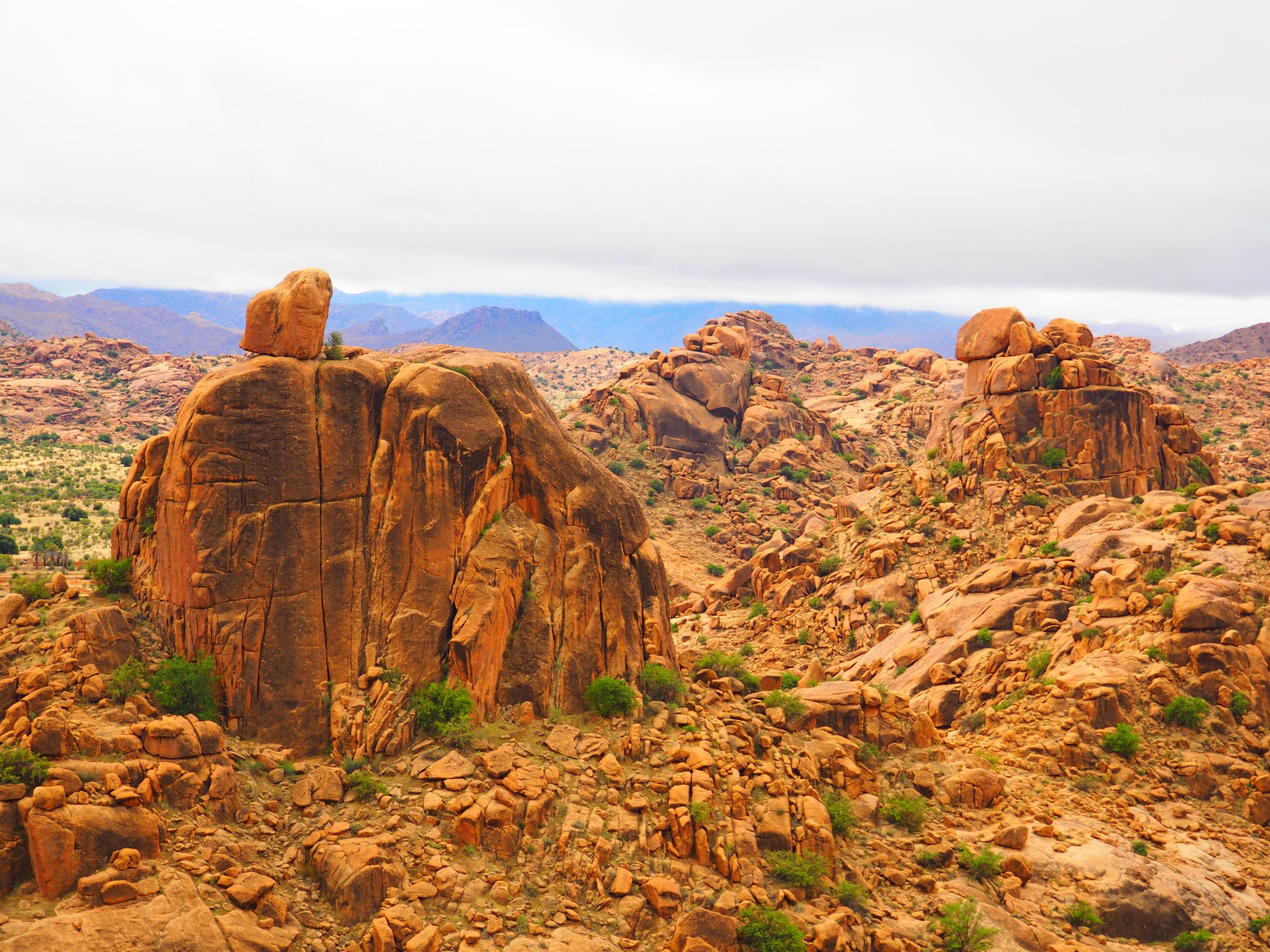
Unlike the sand dunes of the Sahara or the snow-capped peaks of the High Atlas, Tafraoute Morocco is defined above all by its geology. The town sits in a valley surrounded by massive granite outcrops that turn a deep pink and orange hue at sunrise and sunset, a phenomenon caused by the mineral composition of the rock reacting with the changing light. Locals and visitors alike gather in the late afternoon to watch the boulders shift color, creating a natural spectacle that photographers travel hundreds of kilometers to capture.
The town itself is built almost entirely from local pink stone, giving it a cohesive, almost sculptural appearance. Flat-roofed houses cling to the hillsides, and the surrounding Ameln Valley is dotted with over two dozen small Berber villages, many of which are still home to families whose ancestors have lived in the region for generations. This blend of dramatic geology and living Amazigh culture is what sets this Anti-Atlas town apart from almost anywhere else in the country, and it’s a big part of why so many visitors describe it as unlike anywhere else they’ve traveled in Morocco.
Getting to Tafraoute Morocco
Reaching Tafraoute Morocco is easier than many travelers expect, though it does require some planning since the town is not served by rail or major air routes. Most visitors arrive via one of the following routes.
From Agadir
The most common way to reach the region is by road from Agadir, a drive that takes approximately three hours through winding mountain passes and increasingly dramatic scenery. Many tour operators, including private day-trip providers, offer guided excursions from Agadir that include stops at scenic viewpoints along the way, making this the most convenient starting point for a Tafraoute day trip. Browse our tours from Agadir
Escape the city, one day at a time
From cascading waterfalls to hidden valleys and laid-back coastal towns, Morocco’s best surprises are just a day trip away. Browse our full lineup and find the one that fits your itinerary.
From Marrakech
Travelers coming from Marrakech typically combine a visit here with a broader southern Morocco itinerary, often routing through Taroudant or Tiznit before continuing into the Anti-Atlas. This journey takes a full day, so most people either overnight in Tafraoute or Tiznit or build the stop into a multi-day desert tour that continues toward Zagora or Merzouga. Browse our tours from Marrakech
From Tiznit
For those already in Tiznit, the drive is a scenic hour and a half to two hours, passing through arid plains before climbing into the granite hills that mark the entrance to the Ameln Valley.
Hiring a private driver or joining an organized tour is generally recommended, since the mountain roads have sharp switchbacks and limited signage, and public transport options in this part of the Anti-Atlas are infrequent.
Top Attractions in and Around Tafraoute
The Painted Rocks (Rochers Peints)
No visit to Tafraoute Morocco is complete without seeing the Painted Rocks, a cluster of granite boulders painted blue in the 1980s by Belgian artist Jean Vérame with the help of local firefighters. Decades later, faded but still visible, the rocks have become one of the most photographed sites in the region and a striking example of land art set against a lunar-like landscape.
Napoleon’s Hat (Le Chapeau de Napoléon)
A short drive from town, this naturally formed rock resembles a tricorn hat and is a popular stop for travelers exploring the valley by car or on foot. The surrounding boulder field offers excellent photo opportunities, especially in the soft light of early morning, and pairs well with a stop at the Painted Rocks on the same outing.
The Ameln Valley and Its Villages
The valley stretching north of Tafraoute Morocco is home to around 26 traditional villages built into the base of the Jebel Lekst massif. Walking or driving through this area offers a glimpse of rural Amazigh life, with almond and argan groves lining the valley floor and centuries-old granaries perched on the hillsides.
Souk Day in Town
Held weekly, the Tafraoute Morocco souk draws traders and residents from surrounding villages who come to sell produce, spices, textiles, and household goods. It’s an excellent opportunity to experience daily life away from the tourist trail and pick up locally made goods, including the region’s famous almond products.
Best Time to Visit Tafraoute Morocco
-
The ideal window for exploring this part of the Anti-Atlas is between October and April, when daytime temperatures are mild and comfortable for hiking and exploring the granite formations. Summer months can bring intense heat, particularly in July and August, when temperatures regularly climb above 40°C in the surrounding valleys, making outdoor exploration far less enjoyable.
February is a particularly special time to visit, as the almond trees throughout the Ameln Valley burst into bloom, covering the hillsides in white and pink blossoms that complement the pink granite backdrop beautifully. This period coincides with the Tafraoute Almond Festival, a celebration of local agriculture, music, and Amazigh culture that draws visitors from across the region.
Early morning and late afternoon are the best times of day for photography, as the low-angle sunlight enhances the pink and orange tones of the rock formations that give the area its name.
Local Culture and Berber Heritage
The Anti-Atlas region has long been home to Amazigh (Berber) communities, and Tafraoute Morocco is no exception. Many residents historically worked as traveling merchants and grocers throughout Morocco and beyond, sending remittances back to build the elaborate stone houses that still characterize the town today. This economic history is part of why the town, despite its remote location, has a surprisingly refined architectural character compared to other rural towns in the south.
Visitors interested in local craftsmanship can find woven textiles, pottery, and silver jewelry produced by artisans in and around the valley. Many families still process almonds and argan oil using traditional methods, and some cooperatives welcome visitors to see the production process firsthand, from cracking argan nuts to pressing oil by hand. Spending time with local families, even briefly, is often cited as a highlight of any trip through this region.
Where to Stay Near Tafraoute
Accommodation options in and around Tafraoute Morocco range from simple guesthouses to boutique riads built in traditional pink stone. Staying overnight allows travelers to catch both sunset and sunrise over the granite hills, which is difficult to arrange on a same-day excursion from Agadir. Several eco-lodges in the surrounding villages offer a quieter, more immersive experience, often with home-cooked Berber meals and guided walks included.
For travelers with limited time, a well-organized day trip from Agadir can still cover the highlights, including the Painted Rocks, Napoleon’s Hat, and a stop in the Ameln Valley, though an overnight stay is recommended for anyone wanting to fully appreciate the changing light on the rock formations of Tafraoute Morocco.
Hiking and Outdoor Activities
Beyond sightseeing by car, the region around Tafraoute Morocco offers excellent hiking opportunities. Trails wind through the boulder fields near town and climb toward Jebel Lekst, rewarding hikers with panoramic views over the valley and its scattered villages. Rock climbers are also drawn to the area, as the granite formations provide routes of varying difficulty amid a uniquely scenic backdrop.
Guided walks with local operators are a good option for those unfamiliar with the terrain, both for safety and for the added cultural context a knowledgeable guide can provide about the villages, agriculture, and history of the valley surrounding Tafraoute.
Combining Tafraoute with Other Southern Morocco Destinations
Many travelers choose to pair a visit here with other highlights of southern Morocco rather than treating it as an isolated stop. A common route links Tafraoute Morocco with Tiznit’s silver souks, the coastal town of Sidi Ifni with its Art Deco architecture, and the Paradise Valley oasis near Agadir. Others extend their journey further south toward Guelmim, known as the historic gateway to the Sahara, or loop back through Taroudant on the way to Marrakech.
Because the town sits at a natural crossroads between the coast and the desert routes further south, it works well as either a standalone day trip or as one stop on a longer circuit. Travelers with more time often find that an extra night here, rather than rushing through, adds significantly to the overall experience.
Practical Tips for Visiting Tafraoute Morocco
A few practical details make travel to Tafraoute Morocco smoother:
- Bring cash: ATMs exist in town but are limited, and smaller villages nearby do not accept cards.
- Pack layers: Temperatures can swing significantly between day and night, especially in winter.
- Wear sturdy shoes: Exploring the granite boulders and hiking trails requires proper footwear.
- Respect local customs: Modest dress is appreciated, particularly when visiting villages away from the main town.
- Plan for limited connectivity: Mobile signal can be inconsistent in the more remote parts of the valley.
- Book transport in advance: Given the town’s remote location, arranging a driver or joining a scheduled tour ahead of time is far more reliable than seeking transport on arrival.
FAQ's about Tafraoute Morocco
Is Tafraoute Morocco worth visiting?
Yes. For travelers interested in dramatic landscapes and authentic Berber culture away from the main tourist routes, it’s one of the most rewarding stops in southern Morocco.
How many days do you need?
A single day trip from Agadir covers the main highlights, but two days allow time to properly explore the Ameln Valley villages and catch both sunrise and sunset over the rocks.
What is the best season for a Sahara Desert trip versus a mountain trek?
Broadly, autumn through spring (roughly October to April) works well for the Sahara, avoiding the extreme summer heat, while the Atlas Mountains are most comfortable in spring and autumn, with winter bringing snow to higher elevations. If your trip spans both regions, shoulder-season travel (spring or autumn) tends to work best for combining the two.
Is it safe to visit?
Yes, the region is generally very safe for travelers, though the mountain roads require an experienced driver, which is why many visitors opt for a guided tour.
What's the best way to see the Painted Rocks and Napoleon's Hat in one trip?
Both sites sit close enough together that a private driver or guided day tour can easily combine them, usually alongside a stop in the Ameln Valley — this is the most efficient way to hit all three highlights in a single outing.
Can you visit Tafraoute without joining a tour?
Yes, self-driving is possible for confident drivers, but the mountain roads have sharp switchbacks and limited signage, so many independent travelers still choose to hire a local driver for the day rather than navigate solo.
Tafraoute Morocco remains one of the country’s most rewarding yet overlooked destinations, offering a rare combination of dramatic natural scenery and living Berber culture. From the surreal Painted Rocks to the almond-blossom-covered slopes of the Ameln Valley, this Anti-Atlas gem rewards travelers willing to venture beyond Morocco’s more famous cities. Whether as a day trip from Agadir or an extended stop on a southern Morocco itinerary, a visit here offers something genuinely different: a landscape sculpted by geology and shaped by centuries of Amazigh heritage.
Have you been to Tafraoute, or is it on your travel list? Share your questions or experiences in the comments below — we’d love to hear from you!