Discover Morocco’s Skincare Secrets on Your Next Trip
Morocco’s Skincare traditions are unlike anything you will find on a drugstore shelf back home. Passed down through generations of Berber women, refined in the steam of centuries-old hammams, and rooted in ingredients that grow nowhere else on earth, this is a beauty culture built on patience, ritual, and nature rather than trends. For travelers, understanding Morocco’s Skincare is not just a wellness curiosity — it’s a doorway into the country’s history, its landscapes, and the daily lives of the people who call it home. In this guide, we’ll walk through the ingredients, rituals, and real places you can visit to experience Morocco’s Skincare for yourself, whether you’re planning a short stopover in Marrakech or a full circuit through the Atlas Mountains and the coast.
What Makes Morocco's Skincare Traditions So Special
Morocco’s Skincare stands apart because it grew out of necessity long before it became a global export. In the arid climate of the Sahara’s edge and the salty winds of the Atlantic coast, Moroccan women needed ways to protect their skin and hair from sun, sand, and dry heat. Over centuries, they built an entire pharmacy from what the land provided: argan trees in the southwest, eucalyptus and rose fields near Kelaat M’Gouna, volcanic clay deposits in the Middle Atlas, and citrus orchards scattered across the plains.
What makes this tradition so compelling for visitors is that it was never separated from daily life or community. Recipes for facial masks, hair oils, and exfoliating pastes were shared at the hammam, at family gatherings, and at weekly souks, not sold as luxury products. Today, that same knowledge underpins much of the natural cosmetics industry, but the most authentic versions are still found in Moroccan homes, cooperatives, and traditional bathhouses rather than in packaged bottles.
A Short History of Morocco's Skincare Traditions
Long before “natural cosmetics” became a marketing category, Morocco’s Skincare rituals were simply survival knowledge, refined over centuries and carried from mother to daughter. Berber communities in the Atlas Mountains and pre-Saharan valleys developed remedies suited to their exact environment: thick oils and clays to counter dry mountain air, cooling floral waters to soothe skin scorched by desert sun, and steam bathing to compensate for the scarcity of running water in many rural homes. Arab and Andalusian influences later added perfumery techniques and new plant knowledge, layering onto what was already there rather than replacing it.
By the time Morocco opened more widely to international travelers in the twentieth century, these home remedies had already proven themselves for generations, which is a large part of why they translated so easily into an export industry. Argan oil cooperatives, many of them founded specifically to give rural women fair wages and steady income, turned a household ingredient into an internationally recognized product without abandoning the traditional pressing methods. That continuity between old and new is still one of the most distinctive things about Morocco’s Skincare today: the products sold in a Marrakech pharmacy or an international spa are, in most cases, made using the same techniques a grandmother in the Atlas foothills would recognize.
Escape the city, one day at a time
From cascading waterfalls to hidden valleys and laid-back coastal towns, Morocco’s best surprises are just a day trip away. Browse our full lineup and find the one that fits your itinerary.
Argan Oil: The Golden Heart of Morocco's Skincare
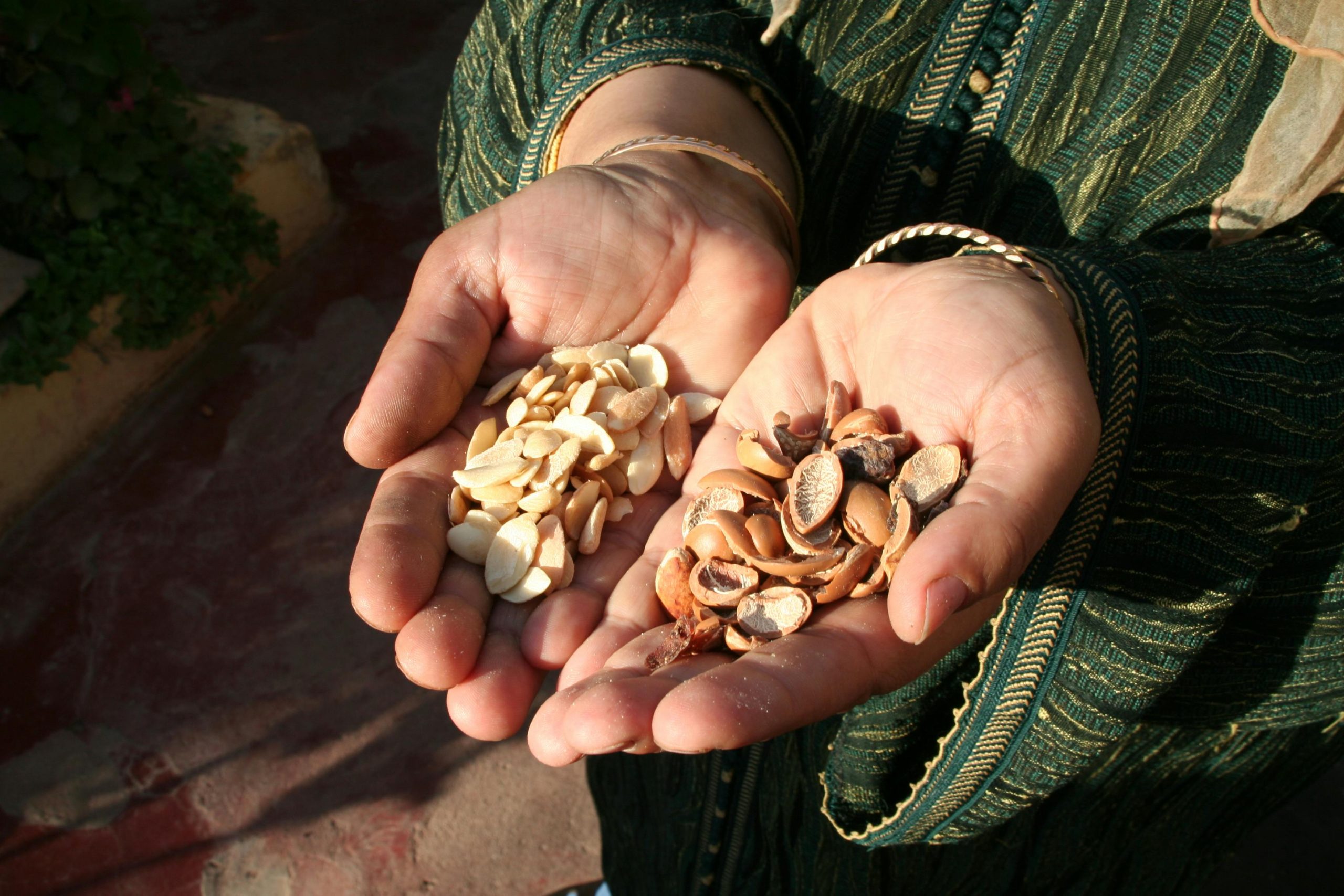
No conversation about Morocco’s Skincare can begin anywhere but argan oil. Often called “liquid gold,” argan oil comes exclusively from the argan tree, a species that grows almost nowhere outside a protected region of southwestern Morocco, particularly around Essaouira and Agadir. The oil is cold-pressed from the kernels inside the tree’s fruit, a process still done by hand by women’s cooperatives using techniques passed down for generations.
Rich in vitamin E, essential fatty acids, and antioxidants, argan oil is prized for softening skin, taming frizz, and reducing the appearance of fine lines. Cosmetic-grade argan oil is used on the face and hair, while a roasted, nuttier version is reserved for the kitchen, most famously in amlou, a Moroccan spread made from argan oil, almonds, and honey. Visiting a women’s cooperative near Essaouira is one of the most rewarding ways to see this cornerstone of Morocco’s Skincare in action, and many day trips from Marrakech now include a stop at one of these cooperatives.
Rhassoul Clay and Moroccan Black Soap Rituals
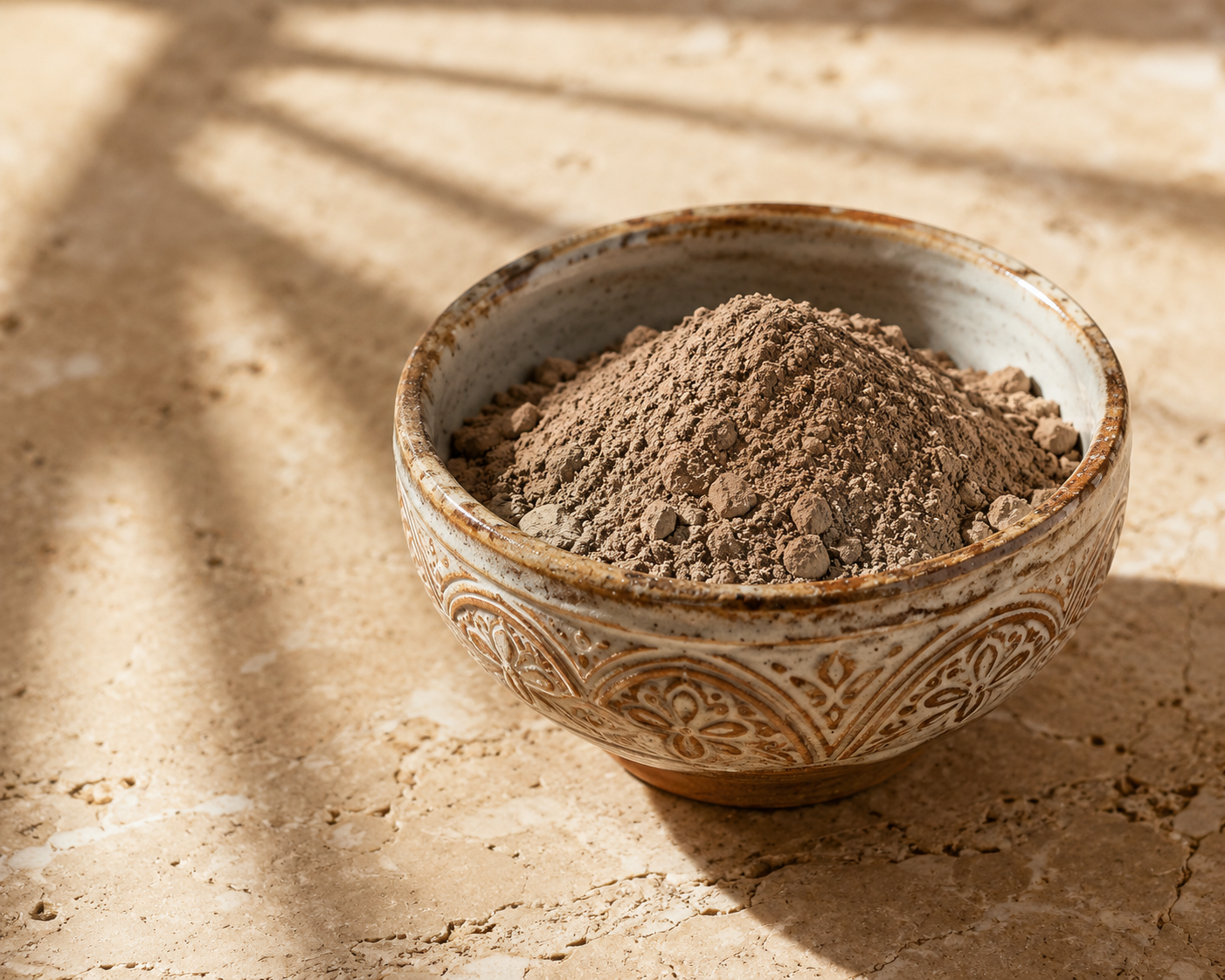
Beyond argan oil, two other staples define Morocco’s Skincare at a deeper, ritual level: rhassoul clay and beldi soap, better known as Moroccan black soap. Rhassoul, mined from deposits in the Atlas Mountains, is a mineral-rich clay that has been used for over a thousand years to cleanse skin and hair without stripping natural oils. Mixed with rose water or plain water into a paste, it draws out impurities while leaving skin remarkably soft.
Moroccan black soap, made from macerated olives and enriched with argan or eucalyptus oil, is a thick, dark paste rather than a solid bar. Applied generously to damp skin and left to sit for several minutes, it softens the outer layer of skin in preparation for exfoliation. Together, black soap and rhassoul clay form the backbone of the traditional hammam routine, and they’re the two products visitors most often bring home after learning about Morocco’s Skincare firsthand.
The Hammam Experience: Morocco's Skincare in Practice
If argan oil and rhassoul clay are the ingredients, the hammam is where Morocco’s Skincare truly comes alive. A hammam is a traditional steam bathhouse, found in nearly every neighborhood across Moroccan cities, where locals go weekly to cleanse, exfoliate, and socialize. The ritual typically follows a set order: black soap is applied and left to soften the skin, the body is scrubbed thoroughly with a coarse mitt called a kessa to remove dead skin, and a rhassoul clay mask is often applied to the hair and face before a final rinse.
For travelers, the hammam is one of the most immersive ways to understand Morocco’s Skincare, because it’s not a spa treatment invented for tourists — it’s a genuine part of everyday Moroccan life. Public hammams offer an authentic, low-cost version of the ritual, while private riads and hotel spas offer a more comfortable, guided introduction for first-time visitors. Either way, expect to leave with noticeably softer skin and a real sense of why this tradition has survived for centuries.
Rose Water, Orange Blossom, and Other Natural Ingredients
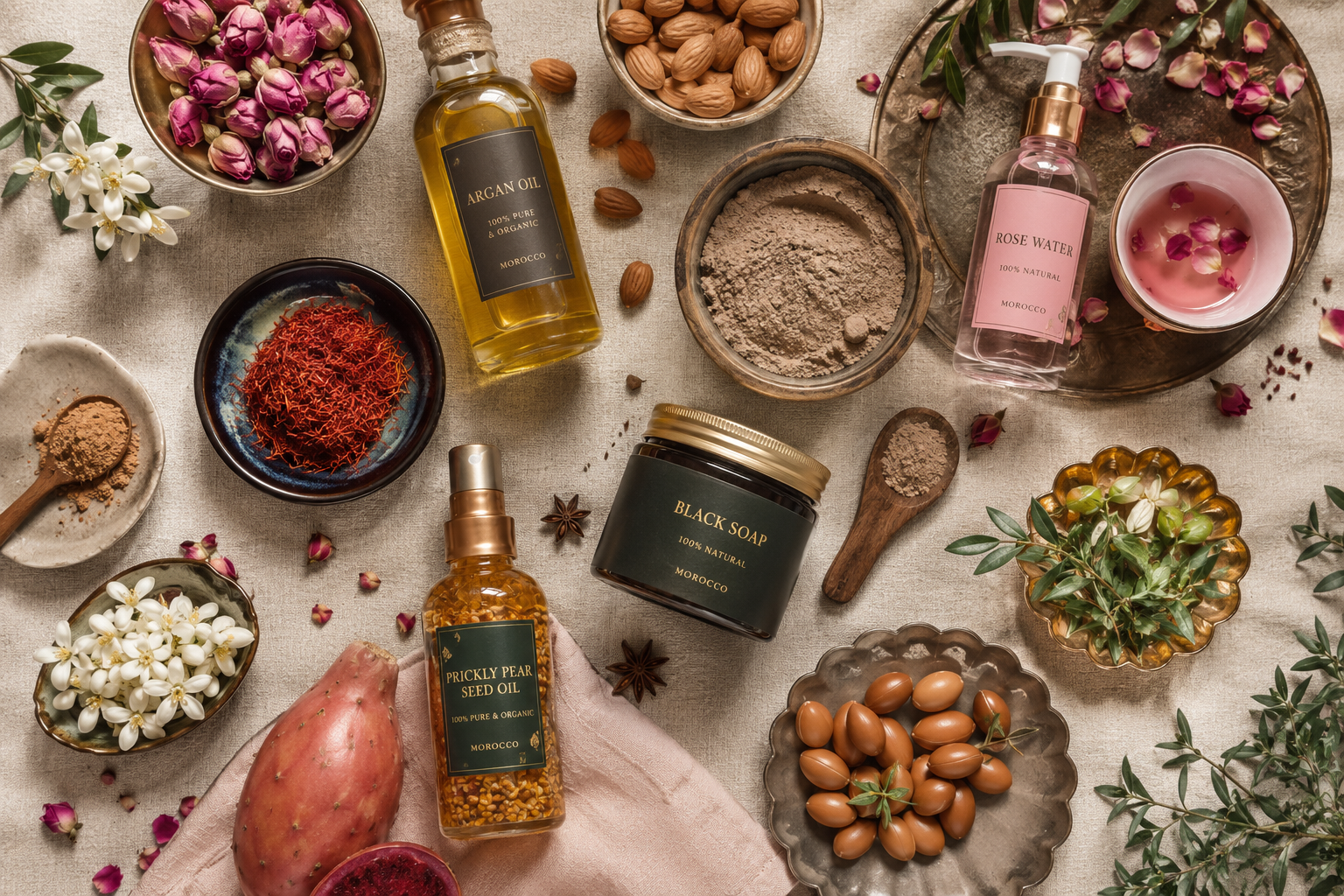
While argan oil and black soap dominate the conversation, Morocco’s Skincare draws on a much wider botanical palette. In the Valley of Roses near Kelaat M’Gouna, Damask roses are harvested each May and distilled into rose water used as a gentle toner and a calming facial mist. Orange blossom water, distilled from bitter orange flowers grown around Fez and Meknes, is used similarly, prized for its ability to soothe irritated or sun-exposed skin.
Prickly pear seed oil, extracted from cactus fruit seeds in an extraordinarily labor-intensive process, has also become a signature of modern Moroccan cosmetics, valued for its high vitamin E content and anti-aging properties. Henna, traditionally used for hand and hair decoration, doubles as a natural conditioning treatment for hair and scalp. Each of these ingredients reflects a different region of the country, which is part of why exploring Morocco’s Skincare so often becomes an excuse to travel further afield, from the rose fields of the Dades Valley to the orange blossom groves near Fez.
Where to Experience Morocco's Skincare Firsthand
-
For visitors who want more than a shopping trip, several destinations across Morocco let you see these traditions produced and practiced in their original settings. Around Essaouira and Agadir, women’s argan oil cooperatives welcome visitors to watch the traditional hand-cracking and pressing process before browsing their products directly, often at fairer prices than in city medinas.
In Marrakech, the herbalist stalls and apothecaries around the souks sell rhassoul clay, black soap, and dried rose petals by weight, and many shopkeepers are happy to explain traditional uses if you ask. For a deeper regional experience, the Dades and Todra valleys near Kelaat M’Gouna are best visited in May during the annual Rose Festival, when the harvest and distillation process is in full swing. Combining a hammam visit with a stop at an argan cooperative makes for a well-rounded introduction to Morocco’s Skincare, and it’s a theme that pairs naturally with day trips from Marrakech, Fez, or Essaouira that already stop at artisan workshops along the route.
Travelers heading toward the coast often combine an Essaouira day trip with a cooperative visit, since several sit directly along the road between Marrakech and the port town, making it easy to fit in without a separate excursion. Those exploring the south, meanwhile, can often pair a visit to an Atlas Mountains cooperative with a broader desert circuit, since many multi-day tours toward Merzouga or the Dades Valley already pass through Berber villages where these traditions are still part of daily life rather than a staged demonstration for visitors.
Bringing Morocco's Skincare Home: Shopping Tips
Souks and cooperatives across the country sell everything needed to recreate a piece of Morocco’s Skincare routine at home, but quality varies widely, so it helps to know what to look for. Genuine cosmetic argan oil should be pale gold and lightly scented, not deep amber or strongly nutty, which signals the culinary version. Buying directly from a certified women’s cooperative, rather than a street vendor, is the safest way to ensure both authenticity and fair wages for the women who produce it.
Rhassoul clay should be sold as raw, unprocessed granules or blocks rather than a pre-mixed paste, since it keeps far longer in its natural form. Black soap is typically sold loose by weight in reusable jars, and a short conversation with the seller about its ingredients is usually a good indicator of quality. Rose water and orange blossom water are widely sold in glass bottles; checking that the label lists only the distilled flower water, with no added alcohol or synthetic fragrance, is the simplest way to avoid diluted versions aimed purely at tourists.
Frequently Asked Questions About Morocco's Skincare
Is argan oil really only found in Morocco?
Wild argan trees grow almost exclusively in a UNESCO-protected biosphere reserve in southwestern Morocco, which is why authentic argan oil is so closely tied to the country.
Can I visit an argan oil cooperative without booking a full tour?
Yes, many cooperatives near Essaouira, Agadir, and Marrakech welcome walk-in visitors, though joining a guided day trip usually adds context and transportation that’s harder to arrange independently.
Is a public hammam appropriate for tourists?
Public hammams are open to everyone and widely visited by tourists, though a private hammam at a riad or spa is a gentler introduction if you’d prefer more guidance and privacy.
What's the difference between cosmetic and culinary argan oil?
Cosmetic argan oil is pressed from raw, unroasted kernels and used on skin and hair, while culinary argan oil is pressed from roasted kernels and has a stronger, nuttier flavor meant for food
From the argan forests of the southwest to the rose fields of the Dades Valley and the steam-filled hammams of the medina, Morocco’s Skincare is a tradition best understood by experiencing it in the places it comes from. Reading about argan oil or rhassoul clay is one thing; watching a cooperative press the oil by hand, or feeling the effects of a real hammam scrub, is another entirely. If you’re planning a trip to Morocco, consider building in time for at least one of these experiences alongside the country’s more famous sights — it’s one of the most memorable, hands-on ways to connect with local culture, and a piece of it, quite literally, can travel home with you.
Have you already tried a hammam ritual or brought home your own bottle of argan oil? Share your experience with Morocco’s Skincare in the comments below — we’d love to hear which tradition left the biggest impression on you.