
Morocco’s Hidden Gems: A Traveler’s Guide to Off-the-Beaten-Path Escapes
Morocco’s Hidden Gems are what most travelers miss on a first trip — and often what they remember most on a second one. Beyond the souks of Marrakech and the blue lanes of Chefchaouen, the country holds a scattering of waterfalls, valleys, fishing towns, and mountain villages that rarely make it onto a standard itinerary, yet capture what makes Morocco so layered: dramatic landscapes, living Amazigh (Berber) traditions, and a pace of life that hasn’t been reshaped around tour buses.
This guide walks through some of the most rewarding lesser-known destinations across the country, what makes each one worth the detour, and the practical details — distance, timing, what to expect — that help you plan a visit that goes beyond the postcard version of Morocco.
Why Seek Out Morocco's Hidden Gems
There’s a reason travelers increasingly build a day or two around these lesser-visited spots rather than spending an entire trip in the main cities. Fewer crowds mean a more relaxed pace — a chance to actually talk with a shopkeeper, linger over a viewpoint, or watch daily life unfold without being one of dozens of tour groups doing the same thing at the same hour. These places also tend to reveal a side of Morocco that’s easy to miss amid the energy of Marrakech’s medina: the country’s dramatic natural variety, from Atlantic lagoons to Middle Atlas waterfalls to pink granite mountains in the far south.
There’s also a practical upside. Many of these destinations sit within a comfortable day-trip radius of Marrakech, Agadir, or Essaouira, which means you don’t need to restructure an entire itinerary to fit them in — a well-planned day trip can add a genuinely different landscape and atmosphere to a city-based stay without adding an extra night of accommodation. Many travelers choose to experience this with a guided tour, since local drivers and guides know which routes, viewpoints, and timing avoid the worst of the crowds and the midday heat.
Beyond the practical logistics, there’s a cultural dimension worth noting. Morocco’s larger cities, however striking, are shaped heavily by tourism infrastructure — riads, guides, souvenir shops built around visitor demand. Many of the destinations covered here still function primarily as working towns and villages, where tourism is a secondary layer rather than the main economy. That distinction shows up in small ways: a shopkeeper’s price doesn’t shift depending on your nationality, a café serves the same menu it would on any other day, and conversations with locals tend to unfold more naturally when you’re not one of fifty visitors passing through that hour.
Top Hidden Gems Worth Discovering
Morocco’s lesser-known destinations span the length of the country, from the Middle Atlas down to the Anti-Atlas and the Atlantic coast. Here are some of the most rewarding.
Ouzoud Falls
Roughly 150 kilometers northeast of Marrakech, in the Middle Atlas region, Ouzoud Falls cascades around 110 meters into a river gorge lined with olive groves — making it the tallest waterfall in North Africa. The drive takes about two and a half to three hours, which keeps it firmly in day-trip territory from Marrakech, though some travelers choose to stay overnight nearby to catch the falls at sunrise before the crowds arrive. A network of trails winds down through the gorge — around 600 steps on the main descent — passing traditional grain mills and shaded olive groves along the way. Troops of wild Barbary macaques — North Africa’s only wild primate — are a regular sight along the trail, though visitors are generally advised to keep a respectful distance rather than approach or feed them. Boat rides near the base of the falls are a popular add-on for getting closer to the cascade itself, and the surrounding villages sell fresh bread, olive oil, and tagines cooked the traditional way for travelers passing through.
Escape the city, one day at a time
From cascading waterfalls to hidden valleys and laid-back coastal towns, Morocco’s best surprises are just a day trip away. Browse our full lineup and find the one that fits your itinerary.
Paradise Valley
Tucked in the foothills northeast of Agadir, on the road toward Imouzzer, Paradise Valley is a palm-lined canyon carved by a seasonal river, with a chain of natural turquoise pools that range from calm wading spots to deeper pools used for cliff jumping. It’s a popular half-day or full-day escape from Agadir precisely because it delivers a dramatic change of scenery — rock cliffs, palm groves, and clear water — without needing a long drive. Trails along the valley floor are generally easy, though closed shoes are worth packing, since the rocks near the pools can be slippery. The valley is also a working landscape rather than a purely scenic one: small Berber villages along the route still rely on the same river for irrigation, and it’s common to pass local farmers tending terraced plots on the walk in.
Taroudant
Often nicknamed the “Grandmother of Marrakech,” Taroudant sits about 80 kilometers east of Agadir in the Sous Valley, and delivers much of Marrakech’s walled-city atmosphere — ochre ramparts, bustling souks, horse-drawn carriages — with a fraction of the crowds. Its 16th-century fortifications, built during the Saadian dynasty, stretch for roughly 7.5 kilometers and are punctuated by nine ornate gates, several of which have observation platforms offering panoramic views back over the town and toward the surrounding Anti-Atlas foothills. The souks here are known for leather goods, ceramics, and Berber silver jewelry, and the pace inside the walls is noticeably calmer than the medinas of Marrakech or Fez. Many visitors combine Taroudant with a stop at the nearby Tiout oasis, a palm grove built around a historic kasbah and a traditional irrigation system, where a donkey ride through the palms is a popular way to see the oasis up close.
Oualidia
Halfway between Casablanca and Essaouira on the Atlantic coast, Oualidia centers around a sheltered lagoon that’s calmer than the open ocean beaches nearby, making it a rare spot on this stretch of coastline that’s genuinely safe for swimming, kayaking, and paddleboarding. It’s also known as something of an oyster capital in Morocco, with oyster farms lining the lagoon and several restaurants built around serving them fresh, often paired with a simple view over the water rather than a formal dining setup. Birdwatchers are drawn here too, since the lagoon acts as a stopover for migratory flamingos and other wading birds, particularly outside the peak summer months.
The overall atmosphere is quiet and low-key, a contrast to the busier beach towns further up the coast, and it’s often described by Moroccan travelers themselves as one of the country’s more underrated weekend destinations.
Legzira Beach and Sidi Ifni
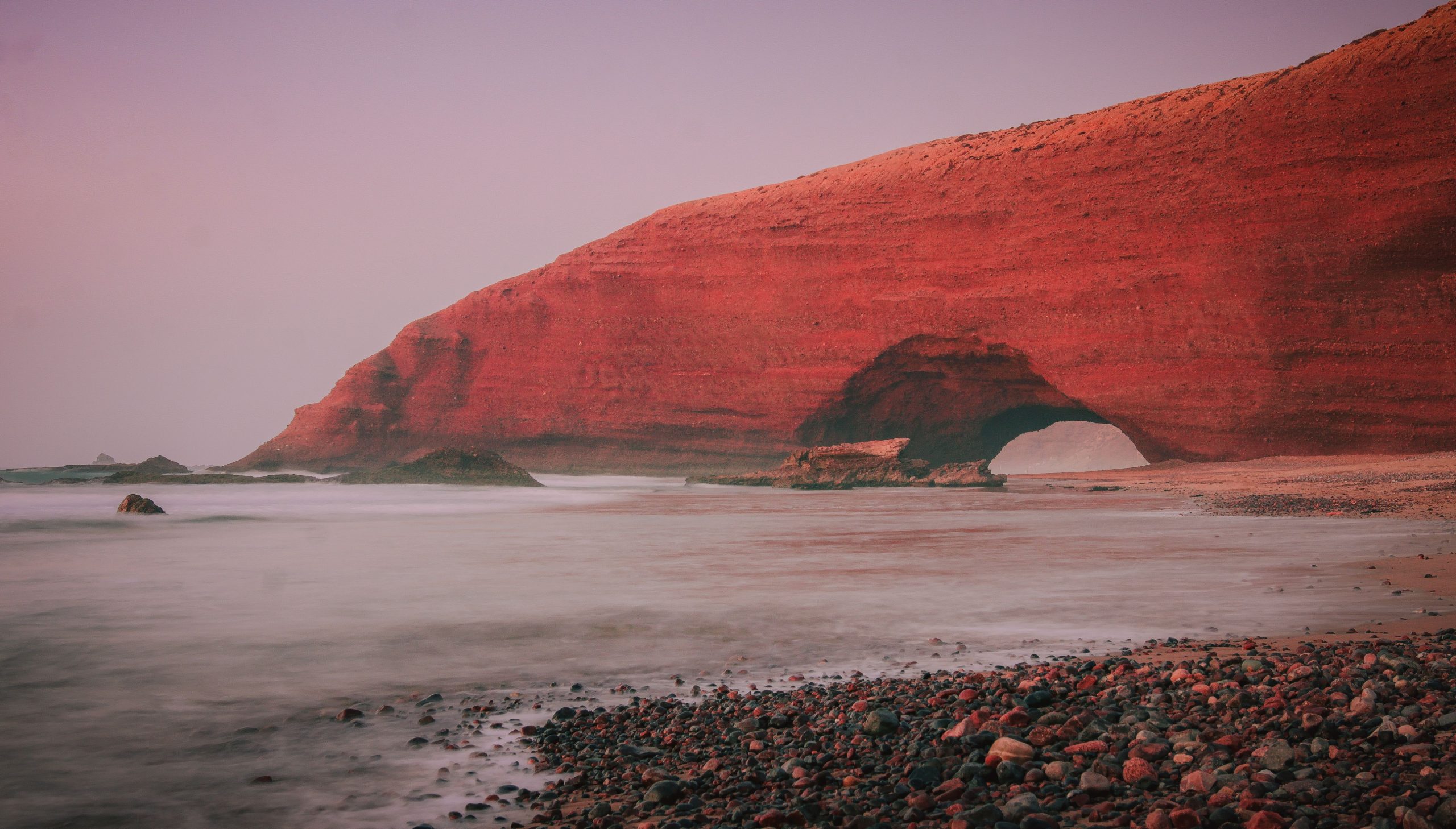
Sidi Ifni, a former Spanish colonial enclave on the southern Atlantic coast, still carries traces of that history in its Art Deco architecture and unhurried seafront. Just north of town lies Legzira Beach, known for its natural rock arches, carved into the cliffs by decades of Atlantic wave action.
One of the two original arches collapsed some years ago, but the remaining formation, along with the long stretch of open beach beneath red cliffs, remains one of the more striking coastal sights in the south of the country.
Draa Valley
South of the High Atlas, the Draa Valley is one of Morocco’s great overlooked landscapes — a long, green corridor of palm groves, kasbahs, and small Berber villages stretched along the seasonal Draa River, with the pre-Saharan zone beginning at its southern edge. Traveling through the valley gives a sense of how life in Morocco’s oasis towns has traditionally worked, built around irrigation channels and date palm cultivation, with fortified kasbahs marking what were once important stops along historic caravan routes.
Ait Bouguemez Valley
Known locally as the “Happy Valley,” Ait Bouguemez sits deep in the Central High Atlas, ringed by some of the range’s highest peaks. Flat-roofed mud-brick villages dot a valley floor of terraced fields, walnut trees, and irrigation channels that have changed little in generations. It’s a slower, more remote destination than most on this list, generally reached via a long drive from Marrakech through smaller mountain roads, which keeps it firmly outside the standard tourist circuit.
For travelers with a bit more time, it’s a rewarding base for gentle valley walks or longer treks into the surrounding mountains, and a chance to see rural Amazigh village life largely untouched by tourism infrastructure.
Asilah
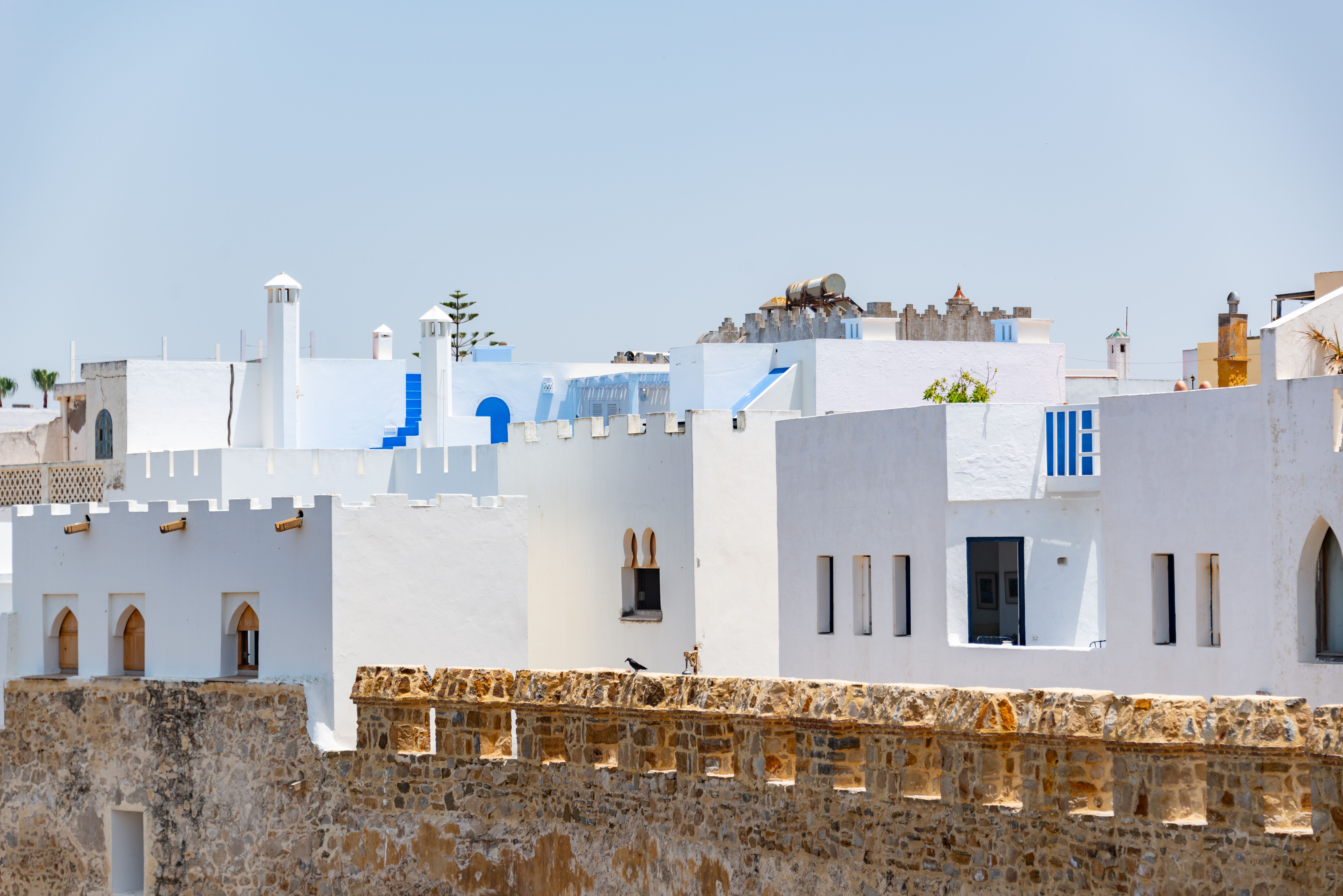
On the northern Atlantic coast, not far from Tangier, Asilah is a small fortified town known for whitewashed, blue-trimmed lanes, Portuguese-built ramparts, and a long-running tradition of mural painting that turns parts of the old town into an open-air gallery each summer. It’s quieter and considerably less visited than Chefchaouen despite a similar blue-and-white palette, and its seafront ramparts and small fishing harbor give it a distinctly coastal, unhurried character.
The town makes an easy stop for travelers exploring Morocco’s northern coast between Tangier and Rabat.
What to Know Before You Go
Before building a trip around these destinations, a few practical points are worth understanding.
Distances and Day-Trip Feasibility
Several of these hidden gems work well as day trips from Morocco’s main hubs. Paradise Valley and Taroudant are both comfortably reachable from Agadir in under two hours. Ouzoud Falls sits within a two-and-a-half to three-hour drive of Marrakech, which makes for a full but manageable day trip. Others, like Tafraoute, the Draa Valley, Ait Bouguemez, or Sidi Ifni, are further afield and are usually better suited to a multi-day route or an overnight stop, rather than a single rushed day.
Asilah, in the north, fits naturally into a coastal itinerary around Tangier rather than as a stop from Marrakech or Agadir.
Building These Into a Wider Itinerary
Rather than treating each hidden gem as an isolated excursion, many travelers find it more efficient to slot them into a route they’re already planning. A Marrakech-based stay pairs naturally with a Ouzoud Falls or Ait Bouguemez day trip; an Agadir or Taghazout base works well with Paradise Valley and Taroudant; and a southern coastal route from Essaouira down toward Sidi Ifni can take in Oualidia and Legzira Beach along the way.
Thinking in terms of a route, rather than a checklist of individual sites, tends to produce a smoother trip with less backtracking.
Best Time to Visit
Spring (March to May) and autumn (September to November) generally offer the most comfortable temperatures for hiking and exploring, particularly in the Anti-Atlas and around waterfalls like Ouzoud, where water flow also tends to be stronger after winter rains. Coastal spots such as Oualidia and Legzira Beach are pleasant for much of the year, given the moderating effect of the Atlantic, though summer brings more visitors to accessible spots.
Winter is workable for most of these destinations and often means fewer crowds, though mountain routes can occasionally be affected by weather.
Practical Tips for Exploring Morocco's Hidden Gems
A little preparation makes these destinations far more enjoyable.
What to pack
- Comfortable, closed walking shoes — many of these sites involve uneven or rocky terrain
- Sun protection: hat, sunscreen, and sunglasses, even on cooler days
- A reusable water bottle, since some routes have limited shops along the way
- A light layer for early mornings or mountain elevation, especially around Tafraoute and Ouzoud
- Cash in Moroccan dirhams, since smaller towns and rural stops often don’t take cards
Budget considerations Entry fees at natural sites like Ouzoud or Paradise Valley are generally modest, while the bigger cost driver is usually transport, especially for the more remote destinations. Guided day trips typically bundle transport, a guide, and sometimes lunch, which can work out more efficient than arranging each piece separately, particularly for longer routes like Ouzoud or Tafraoute.
Respecting local communities Many of these hidden gems are also home to Amazigh communities where daily life continues much as it always has. Asking before photographing people, dressing modestly in villages and religious sites, and supporting local cooperatives and small shops rather than only large tour operators all go a long way toward keeping these places genuinely welcoming.
Physical demands Most of these destinations involve some walking on uneven ground — descending to Ouzoud Falls, hiking around Tafraoute’s rock formations, or wading into Paradise Valley’s pools. None require technical skill, but a reasonable level of fitness and appropriate footwear make the experience considerably more comfortable.
Language and connectivity Arabic and Amazigh languages (Tashelhit in much of the south) are the everyday languages in most of these towns and villages, though French is widely understood and guides typically speak English as well. Mobile signal is generally reliable in towns like Taroudant, Tafraoute, and Oualidia, but can be patchy in more remote stretches like the Draa Valley or Ait Bouguemez, so it’s worth downloading offline maps in advance if traveling independently.
Taghazout’s coastline is dotted with named breaks that regulars refer to by nickname, and part of the fun of a guided excursion is having someone point them out as you pass.
- Anchor Point — the most famous break in the area and one of the best-known in Morocco, a long right-hand point break first discovered by Australian surfers in the 1960s. It works best on northwest swells and is generally reserved for experienced surfers, given its power and rocky bottom.
- Panorama Beach — a sandy-bottomed stretch just south of the village, offering a gentler, more forgiving wave than Anchor Point. This is typically where beginner lessons take place, since the sand bottom makes wipeouts far less punishing.
- Hash Point — located right at village level, within easy walking distance of Taghazout’s center, making it a convenient, friendly right-hander for a quick session between other activities.
- Killer Point — a reef break generally reserved for more experienced surfers, given the rockier bottom and punchier waves further along the coast.
- Devil’s Rock — another reef-influenced break in the same stretch as Killer Point, best suited to surfers already comfortable around rocks and shallower water.
- Boilers and La Source — smaller, less crowded breaks north of the main village that give more experienced surfers an alternative when Anchor Point is busy.
- K17 — a long, sandy beach further along the coast with several separate peaks, popular with beginners and improving intermediates looking for cruisy, forgiving whitewash.
On the wellness side, look out for rooftop studios offering sunrise or sunset yoga, small wellness centers combining stretching with breathwork, and beachfront spots where instructors run informal sessions right on the sand. Some operators also incorporate short mindfulness or meditation breaks between the surf and yoga portions of the day, which is a nice touch if you’re trying to fully disconnect for a few hours. A handful of wellness centers in the area also offer traditional hammam and massage add-ons, which pair naturally with a morning spent paddling and balancing on a board.
FAQ's about Morocco's Hidden Gems
Are Morocco's hidden gems safe to visit?
Yes, generally. These are established, well-visited destinations rather than obscure or risky locations — they’re simply less crowded than Morocco’s headline attractions. Standard travel precautions apply, as they would anywhere.
Can I visit more than one hidden gem in a single day?
It depends on the destinations and your starting point. Paradise Valley and Taroudant, for instance, can sometimes be combined from Agadir depending on the itinerary, while Ouzoud Falls from Marrakech usually fills a full day on its own given the drive time involved.
Do I need a car to visit these places, or can I book a tour?
Both are possible. Some spots, like Paradise Valley, are manageable independently by taxi. For longer or more remote routes, a guided day trip is generally more efficient and includes local knowledge that’s hard to replicate on your own.
Which hidden gem is best for a first-time visitor to Morocco?
Paradise Valley or Taroudant tend to be the easiest introductions, since both are close to Agadir, require relatively little walking, and don’t demand a multi-day commitment.
Is it better to visit these places instead of Chefchaouen or Essaouira?
Not necessarily instead — many travelers combine both. Chefchaouen and Essaouira remain popular for good reason, but pairing them with a lesser-known stop rounds out a trip with more variety and fewer crowds.
How much time should I set aside to properly see Morocco's hidden gems?
It depends on how many you want to include. A single well-chosen destination fits comfortably into a one-day excursion from a nearby city, while covering several — especially ones spread across different regions like the Anti-Atlas and the Middle Atlas — is more realistic as part of a longer, multi-stop itinerary.
Morocco’s Hidden Gems offer a version of the country that moves at a different pace — turquoise pools carved into a canyon, a 500-year-old walled town without the crowds, a waterfall shared mostly with wild macaques and olive groves. Whether it’s a single well-chosen day trip or a route strung together across several, these destinations add depth to a Morocco itinerary that the major cities alone don’t always capture.