
Trekking Mount Toubkal: North Africa’s Highest Peak
Trekking Mount Toubkal is one of the most rewarding mountain adventures in Morocco and an unforgettable way to experience the High Atlas Mountains. Rising to 4,167 meters (13,671 feet), Mount Toubkal is the highest peak in Morocco and North Africa.
Located south of Marrakech, Toubkal attracts hikers from around the world who want to combine physical adventure with spectacular mountain scenery and authentic Amazigh culture.
The trek takes you through remote mountain villages, rocky valleys, high-altitude landscapes, and traditional communities before reaching the summit. For travelers staying in Marrakech, Mount Toubkal is also one of the most accessible major mountain adventures in Morocco.
If you are planning a wider Moroccan adventure, you can also explore the Morocco tours from Marrakech offered by Xplore Morocco and combine mountain landscapes with the Sahara Desert, historic cities, and cultural experiences.
Where Is Mount Toubkal?
Mount Toubkal is located in the High Atlas Mountains of Morocco, within Toubkal National Park.
The mountain is approximately 70 kilometers south of Marrakech, making the region relatively easy to reach from Morocco’s most popular tourist city.
Most Toubkal treks begin in or around Imlil, a mountain village that serves as the traditional gateway to the summit.
From Marrakech, travelers can travel toward Imlil before beginning the trek into the mountains.
The contrast is remarkable: within a few hours, you can leave the busy streets of Marrakech and find yourself surrounded by steep mountain slopes, terraced fields, valleys, and Amazigh villages.
How High Is Mount Toubkal?
Mount Toubkal reaches 4,167 meters above sea level, making it:
- The highest mountain in Morocco
- The highest mountain in North Africa
- One of the most accessible high-altitude trekking destinations in Africa
Although Toubkal does not require technical climbing under normal summer conditions, reaching the summit is still physically demanding.
Altitude, steep terrain, changing weather, and long trekking days mean that good preparation is essential.
How Difficult Is the Mount Toubkal Trek?
The difficulty of Mount Toubkal trekking depends on your fitness, experience, season, weather, and itinerary.
For a reasonably fit traveler, the standard trek is achievable without previous mountaineering experience.
However, it should not be considered an easy hike.
The main challenges include:
- Long uphill sections
- Rocky terrain
- High altitude
- Cold temperatures at night
- Strong sun exposure
- Potential altitude symptoms
- Changing mountain weather
You do not necessarily need technical climbing skills for a standard summer ascent, but you should be comfortable hiking for several hours per day.
How Many Days Do You Need to Trek Mount Toubkal?
A classic Mount Toubkal itinerary usually takes 2 to 4 days, depending on the route and pace.
A common itinerary looks like this:
Day 1: Marrakech – Imlil – Toubkal Refuge
Travel from Marrakech to Imlil and begin trekking through the High Atlas Mountains.
The route passes through mountain landscapes and traditional Amazigh villages before reaching the Toubkal Refuge.
Day 2: Toubkal Refuge – Mount Toubkal Summit – Imlil
Start early for the summit attempt.
The climb is steep and demanding, but reaching the summit provides spectacular panoramic views across the surrounding Atlas Mountains.
After spending time at the summit, descend toward the refuge and eventually continue toward Imlil.
Day 3: Imlil – Marrakech
Enjoy a more relaxed morning before returning to Marrakech.
Some itineraries can be extended to include additional mountain valleys, villages, and cultural experiences.
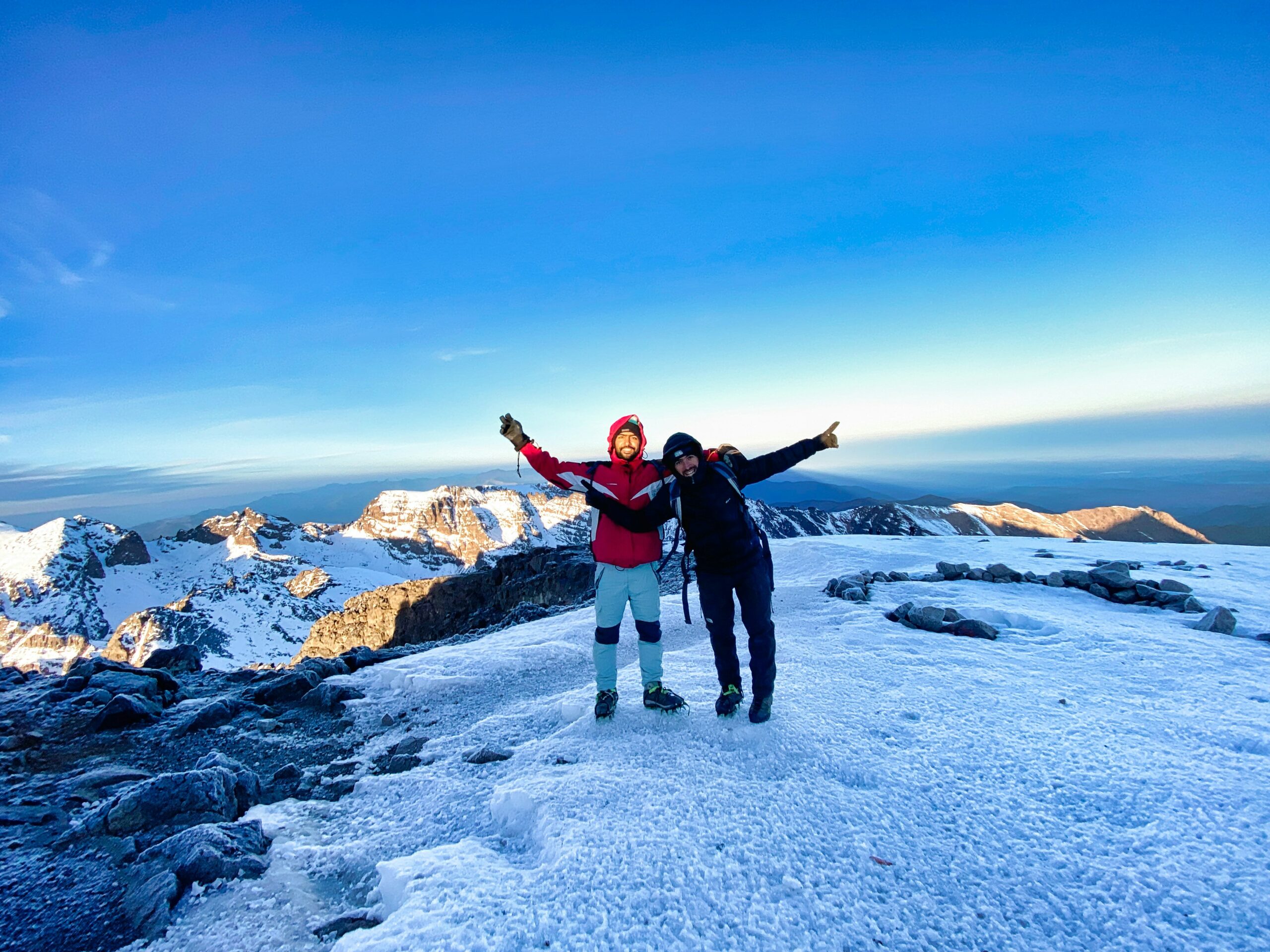
The Mount Toubkal Trekking Route
The traditional route begins in Imlil, which is one of the best-known mountain villages in the region.
From Imlil, the trail gradually climbs through the valley toward the Toubkal mountain area.
Along the way, you may encounter:
- Amazigh villages
- Mountain streams
- Terraced fields
- Rocky trails
- Juniper and alpine vegetation
- Dramatic mountain peaks
- Traditional mountain homes
The landscape changes considerably as you gain altitude.
Lower sections are more influenced by human settlement and agriculture, while higher sections become increasingly rocky and rugged.
Imlil: The Gateway to Mount Toubkal
Imlil is one of the most important starting points for Mount Toubkal trekking.
The village sits in a spectacular mountain valley and has developed around trekking tourism while maintaining its traditional Amazigh character.
Many trekkers stay in Imlil before or after their ascent.
It is also possible to spend additional time exploring the surrounding villages and valleys rather than immediately heading toward the summit.
For travelers who want to experience Morocco beyond the major cities, the High Atlas region offers a completely different perspective on the country.
Mount Toubkal and Amazigh Culture
One of the most interesting aspects of trekking Mount Toubkal is that the experience is not only about reaching a summit.
The High Atlas is home to Amazigh communities whose traditions, language, architecture, agriculture, and hospitality are an important part of the region’s identity.
Along the trek, travelers may pass through traditional villages and interact with local guides, muleteers, guesthouse owners, and mountain families.
This cultural dimension makes Toubkal different from a purely mountain-focused adventure.
You are not simply walking through a wilderness landscape—you are traveling through a living cultural region.
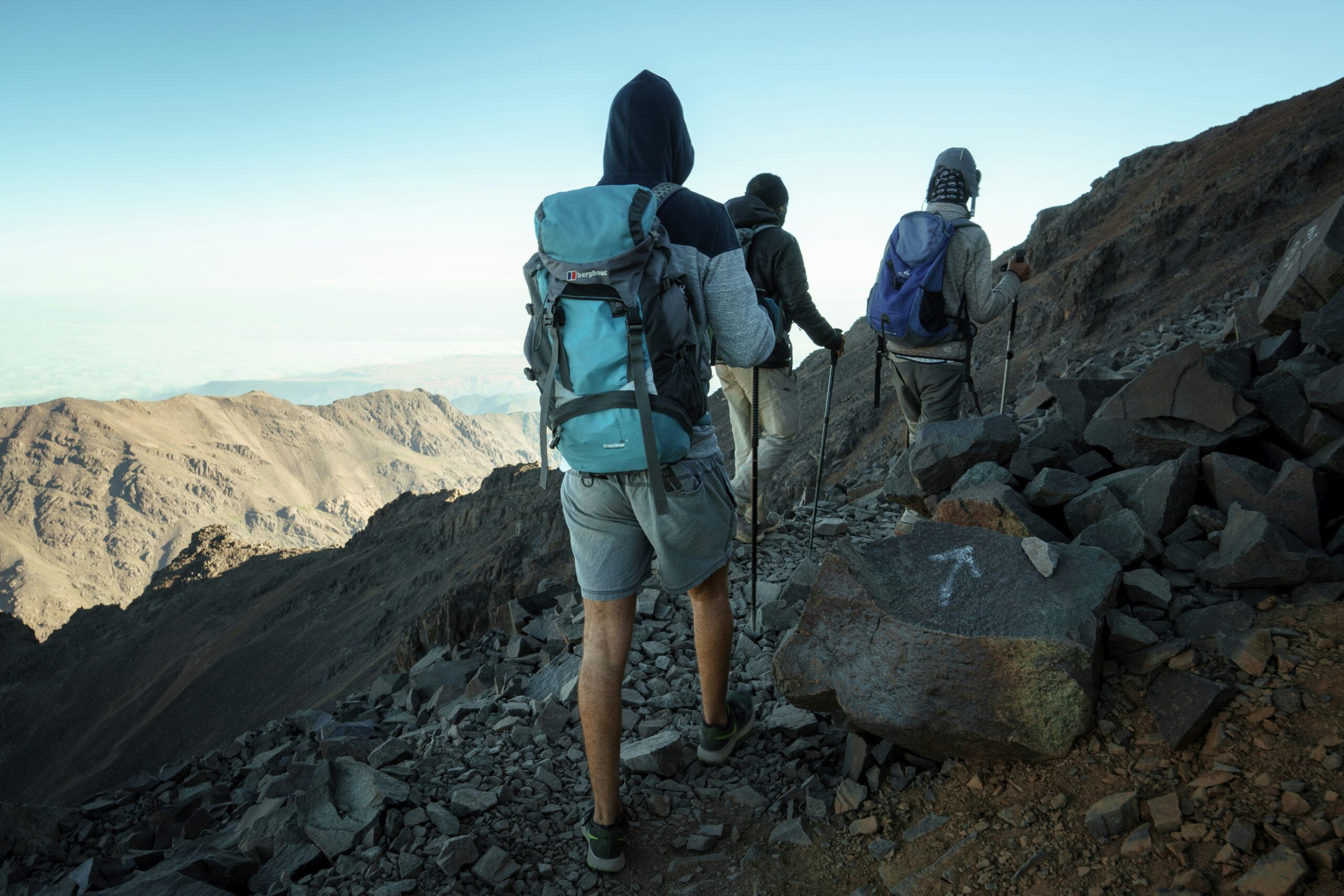
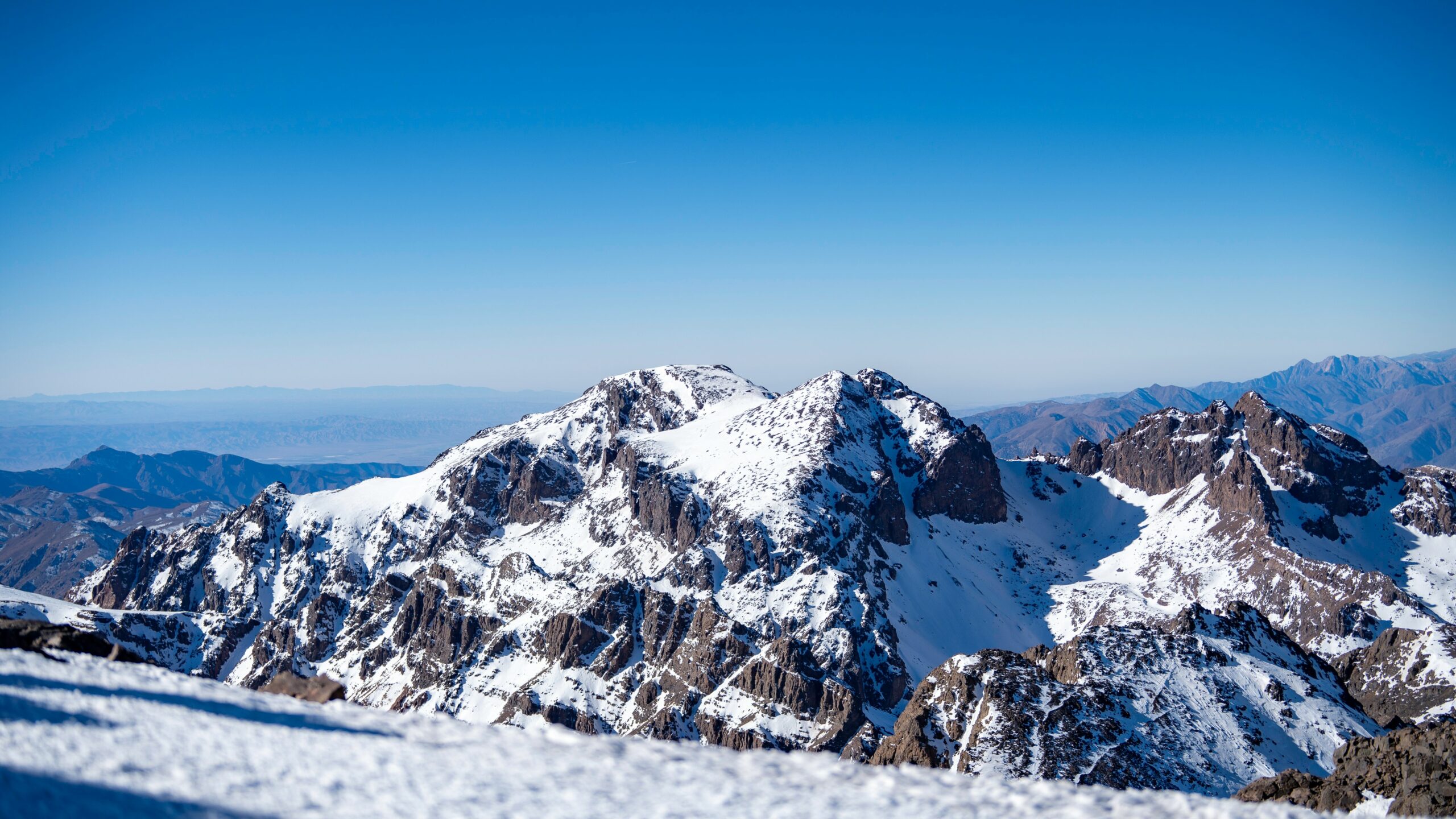
Best Time to Trek Mount Toubkal
The best time to trek Mount Toubkal depends on the type of experience you want.
Spring
Spring can offer pleasant temperatures at lower elevations and beautiful mountain landscapes.
Snow can remain at higher elevations, particularly early in the season.
Summer
Summer is generally the most popular period for the standard Toubkal ascent.
The weather is often more suitable for trekking, although temperatures can become hot at lower elevations.
Mountain weather can still change quickly.
Autumn
Autumn is an excellent period for trekking.
Temperatures are often more comfortable than during the hottest summer periods, and the trails can be quieter.
Winter
Winter transforms Toubkal into a serious high-altitude mountain environment.
Snow and ice can cover the higher route, and conditions may require mountaineering experience and equipment such as crampons and an ice axe.
Winter ascents should be planned with experienced mountain professionals.
What to Pack for Mount Toubkal
Your packing list depends heavily on the season.
For a standard trekking trip, consider bringing:
- Good hiking boots
- Comfortable hiking trousers
- Moisture-wicking layers
- Warm fleece
- Waterproof jacket
- Warm hat
- Gloves
- Sunglasses
- Sunscreen
- Headlamp
- Water bottles
- Small backpack
- Sleeping bag suitable for the season
- Trekking poles
- Personal medication
- Basic first-aid supplies
For winter trekking, additional technical equipment may be necessary.
Always check current mountain conditions before departure.
Do You Need a Guide for Mount Toubkal?
Hiring a qualified local mountain guide is strongly recommended.
A local guide can help with:
- Route navigation
- Weather awareness
- Mountain safety
- Pace management
- Communication with local communities
- Accommodation arrangements
- Mule support
- Emergency decisions
The value of a local guide is particularly important when weather conditions change or when trekking during winter.
A guide can also make the journey more culturally meaningful by explaining local traditions, landscapes, and village life.
Mount Toubkal Altitude and Acclimatization
Altitude is one of the most important factors to consider when trekking Mount Toubkal.
At 4,167 meters, the summit is high enough for some trekkers to experience altitude-related symptoms.
Possible symptoms can include:
- Headache
- Dizziness
- Fatigue
- Nausea
- Shortness of breath
The best way to reduce risk is to ascend gradually and listen to your body.
Do not ignore severe symptoms.
If you feel significantly unwell, descending to a lower altitude is generally the safest response.
Is Mount Toubkal Suitable for Beginners?
Yes, Mount Toubkal can be suitable for fit beginners, particularly during the warmer months and when following a well-organized itinerary.
You do not need previous experience climbing other 4,000-meter peaks.
However, beginners should prepare physically before the trek.
Useful preparation can include:
- Long-distance walking
- Uphill hiking
- Stair climbing
- Cardiovascular training
- Strength training
- Hiking with a backpack
The better prepared you are, the more you can enjoy the mountain rather than simply trying to complete each stage.
Mount Toubkal vs. a Sahara Desert Tour
Morocco is unusual because travelers can combine a high-altitude mountain adventure with a desert journey in the same trip.
After trekking in the High Atlas, you can continue toward the Sahara to experience:
- Erg Chebbi dunes
- Camel trekking
- Desert camps
- Traditional music
- Desert villages
- Stargazing
Xplore Morocco’s current tour portfolio includes several routes from Marrakech toward Fes and the Sahara, making it possible to combine different Moroccan landscapes within one trip.
For example, travelers can explore the Private Marrakech to Fes Desert Tour and other desert journeys offered by Xplore Morocco.
What Makes Mount Toubkal Special?
Mount Toubkal is more than just a high mountain.
Its appeal comes from the combination of:
High-Altitude Adventure
Standing at 4,167 meters, the summit provides a genuine high-altitude trekking experience.
Amazigh Culture
The route passes through communities where traditional mountain culture remains an important part of everyday life.
Dramatic Landscapes
The High Atlas offers spectacular valleys, cliffs, ridges, and mountain panoramas.
Accessibility
Unlike many major high mountains around the world, Toubkal can be reached relatively easily from Marrakech.
Cultural Combination
The trek can be combined with Marrakech, the Sahara Desert, Ait Benhaddou, and other Moroccan destinations.
Tips for a Successful Toubkal Trek
Start Training Before Your Trip
Build your endurance gradually rather than relying on last-minute preparation.
Take Your Time
There is no advantage to rushing at high altitude.
Stay Hydrated
Carry enough water and drink regularly throughout the trek.
Protect Yourself from the Sun
UV exposure becomes stronger at higher elevations.
Dress in Layers
Mountain temperatures can change dramatically throughout the day.
Listen to Your Guide
Local mountain guides understand the terrain and weather conditions.
Respect Local Communities
Ask before photographing people and respect local customs in villages.
Leave No Trace
Carry your waste with you and help protect the mountain environment.
Can You Trek Mount Toubkal from Marrakech?
Yes. Marrakech is the most common starting point for travelers planning a Toubkal adventure.
The journey from Marrakech to the High Atlas is relatively straightforward, making it possible to organize a mountain excursion as part of a wider Morocco itinerary.
Many travelers choose to spend several days in Marrakech before heading into the mountains.
This allows you to combine the city’s historic medina and cultural attractions with a completely different outdoor experience.
If you are planning a longer trip, explore the Morocco tours from Marrakech with Xplore Morocco to combine your mountain adventure with desert and cultural destinations.
Mount Toubkal Trek: Practical Information
Mountain: Mount Toubkal
Elevation: 4,167 meters
Region: High Atlas Mountains, Morocco
Nearest major city: Marrakech
Typical starting point: Imlil
Difficulty: Moderate to challenging depending on season and conditions
Best period for standard trekking: Spring, summer, and autumn
Winter: Requires additional preparation and technical equipment depending on conditions
Typical trek duration: 2–4 days
Recommended: Experienced local mountain guide
Trekking Mount Toubkal is one of the best ways to experience Morocco beyond its cities and desert landscapes. The combination of challenging mountain trails, spectacular High Atlas scenery, and encounters with Amazigh communities creates an adventure that feels both physically rewarding and culturally meaningful. With proper preparation, a suitable itinerary, and an experienced local guide, reaching the summit of North Africa’s highest peak can become one of the most memorable experiences of your Morocco journey.
Would you like to trek Mount Toubkal during your next Morocco trip, or would you prefer combining the High Atlas with a Sahara desert adventure? Share your thoughts in the comments!