How World Cup 2030 Morocco Development Is Transforming the Kingdom
World Cup 2030 Morocco Development is one of the most ambitious national transformation projects the Kingdom has ever undertaken. As co-host of the 2030 FIFA World Cup alongside Spain and Portugal, Morocco is investing billions of dirhams into stadiums, highways, high-speed rail, airports, and hospitality infrastructure. For travelers planning a trip to Morocco in the coming years, this wave of development means shorter transfer times, upgraded cities, and an even richer experience exploring the country’s souks, deserts, and coastlines. In this guide, we break down exactly what is changing, where, and how you can experience the magic of Morocco before the tournament kicks off, so you can plan your visit with confidence and see the transformation for yourself.
What Is World Cup 2030 Morocco Development?
At its core, World Cup 2030 Morocco Development refers to the coordinated national program of construction, renovation, and modernization launched to prepare Morocco for its role as a 2030 World Cup host nation. Unlike a single stadium project, this initiative touches nearly every sector of the economy: transport, tourism, telecommunications, urban planning, and public services. The government has framed the effort not just as a sporting investment but as a long-term legacy plan, designed to leave Morocco with world-class infrastructure long after the final whistle blows.
Six Moroccan cities — Casablanca, Rabat, Marrakech, Tangier, Fez, and Agadir — are expected to host matches, each with its own roadmap tied to this wider national strategy. Ministries overseeing tourism, transport, and urban development are working in parallel, coordinating timelines so that hotels, roads, and stadiums reach completion in a synchronized way rather than in isolation. This is part of why the program is often described as the largest coordinated infrastructure push in the country’s modern history, comparable in scale to the projects undertaken around the 2022 launch of the Al Boraq high-speed rail line, but spread across a much wider footprint of cities and sectors.
International observers, including FIFA delegates and regional tourism boards, have pointed to Morocco’s track record with major events — from the Africa Cup of Nations to global sporting federations’ congresses — as evidence the country can deliver on this scale. That experience is now being channeled into a single, unified roadmap that ties stadium readiness directly to hotel capacity, road quality, and airport throughput, rather than treating each as a separate project.
New and Upgraded Stadiums Across Morocco
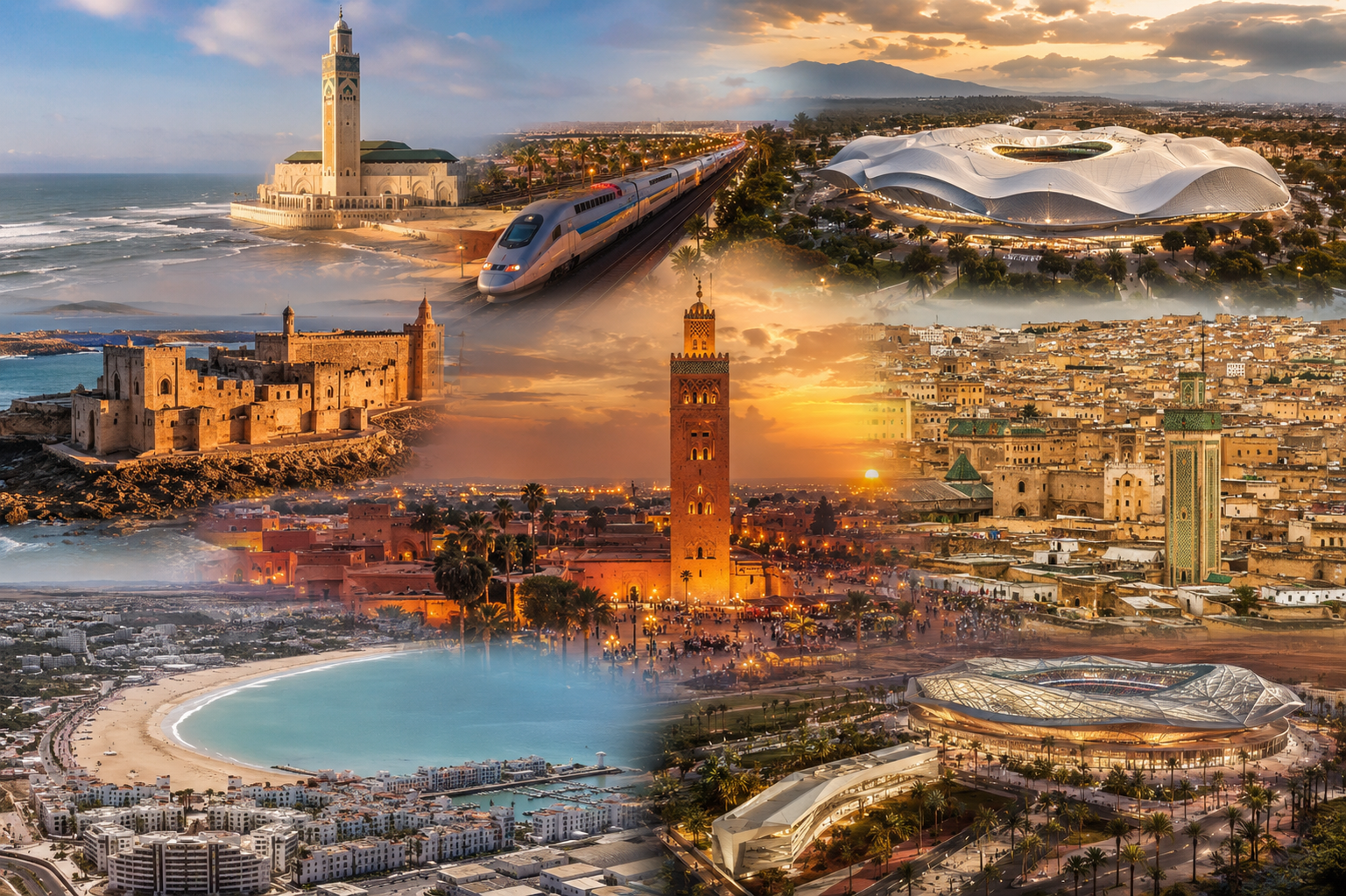
Stadiums sit at the heart of any World Cup preparation, and Morocco’s approach blends brand-new construction with the renovation of existing icons. The centerpiece is the Grand Stade Hassan II near Casablanca, designed to become one of the largest football stadiums in the world once complete and expected to host the tournament’s opening or final matches.
Positioned just outside the city, the stadium is planned as a multi-use complex that will also host concerts, cultural events, and other sporting competitions well beyond 2030, ensuring it remains a landmark rather than a single-purpose venue.
In the capital, the historic Stade Moulay Abdellah has already undergone a major renovation, expanding capacity and modernizing facilities to meet FIFA’s strict standards while preserving its role as home to the national team and a symbol of Moroccan football heritage.
Beyond these two flagship venues, stadiums in Marrakech, Tangier, Fez, and Agadir are being upgraded with new seating, improved pitches, better lighting systems, and expanded VIP and media facilities.
Training grounds near each host city are also being built or renovated, since FIFA requires certified practice facilities close to every venue, adding another layer of construction activity that benefits local sports infrastructure long after the tournament ends. Local football academies are already being invited to use several of these upgraded training sites in the interim, meaning the benefits of stadium-related construction are reaching Moroccan athletes well before the opening match, not just international teams arriving in 2030.
Explore Marrakech Before 2030
Experience the souks, Atlas Mountains, and desert excursions from Marrakech before the World Cup transformation reshapes the city. Book your private tour today.
Infrastructure and Transport Investment
Stadiums alone cannot host a World Cup — a country needs the roads, rails, and airports to move millions of visitors efficiently between cities and match days. Morocco is extending and upgrading its highway network to connect host cities more directly, cutting travel times between Casablanca, Rabat, Marrakech, and Tangier for residents and tourists alike.
New interchanges and widened sections are being prioritized on the corridors that will see the heaviest traffic during the tournament, while secondary roads leading to popular excursion destinations are also being resurfaced as part of the broader push.
The success of the Al Boraq high-speed line between Tangier and Casablanca has encouraged authorities to extend high-speed rail southward toward Marrakech and eventually Agadir, a project accelerated specifically because of these preparations. Once complete, this extension will cut travel time between Morocco’s economic capital and its most visited tourist city dramatically, making multi-city itineraries far more practical for both business and leisure travelers. Meanwhile, Mohammed V International Airport in Casablanca and Marrakech Menara Airport are both undergoing terminal expansions and capacity upgrades, anticipating a sharp rise in international arrivals as the tournament approaches.
Smaller regional airports serving Agadir, Fez, and Tangier are also being modernized, since organizers expect fans to fly directly into host cities rather than routing everyone through a single hub. Port facilities in Tangier are being reinforced as well, reflecting the city’s strategic position as a gateway between Morocco and Europe, and new logistics hubs are being built to support the flow of construction materials and, later, tournament equipment and supplies.
Public transit within cities is receiving equal attention. Casablanca and Rabat are extending tramway lines to connect stadiums, airports, and city centers more directly, reducing reliance on private vehicles during peak match days.
Bus rapid transit corridors are also being planned in Marrakech and Agadir, giving both residents and visitors faster, more reliable ways to move around without adding pressure to already busy roads. Taken together, these transport investments are designed to function as a single connected network rather than a collection of isolated upgrades, which is part of what makes this program so significant compared to previous national infrastructure efforts.
Tourism Growth Fueled by the Development
The tourism sector is arguably the biggest long-term beneficiary of this national push. Hotel groups are expanding capacity in Casablanca, Rabat, and Marrakech, while smaller riads and boutique guesthouses are also investing in renovations to meet growing international demand. Airlines have begun adding new routes to Moroccan cities, anticipating the surge of fans and travelers expected around 2030 — meaning more flight options, better accommodation choices, and improved services well ahead of the tournament itself.
Beyond the six official host cities, satellite towns and nearby destinations are also seeing indirect benefits. Ait Benhaddou, the Ourika Valley, and the coastal town of Essaouira are all popular add-ons to itineraries built around Marrakech, and improved regional roads mean these day-trip destinations are becoming easier and faster to reach. Local guides, artisans, and small tour operators across these areas report growing interest from travelers who want to combine a stay in a host city with excursions into the surrounding countryside, a trend expected to accelerate as international awareness grows.
Host Cities: What to Expect
Each host city is developing its own identity within this national plan. Casablanca is gaining new tramway extensions and waterfront redevelopment as the primary international gateway, positioning the city as a modern arrival point for visitors before they head onward to the rest of the country. Marrakech is combining stadium renovation with expanded connections to the Atlas Mountains and Sahara excursions, reinforcing its long-standing role as the launchpad for desert tours and mountain day trips.
Rabat continues to modernize public spaces around Stade Moulay Abdellah while preserving its historic medina and administrative character, and Tangier is leveraging port and rail upgrades to strengthen its role as a bridge between Africa and Europe. Fez and Agadir round out the host city list, each investing in hospitality and transport upgrades suited to their own tourism strengths — cultural heritage in Fez and coastal leisure in Agadir.
Where to Stay: Accommodation Tips
Riads — traditional Moroccan guesthouses built around a central courtyard — are the most popular accommodation choice for travelers, and for good reason. They tend to be small, family-run, and centrally located within the medina walls, which means staff are often personally invested in guests’ comfort and safety.
When booking, look for:
- Recent reviews specifically mentioning solo female guests
- Riads with 24-hour reception or a live-in caretaker
- Central medina locations that are walkable to major sites
- Hotels or riads offering airport pickup, which avoids arriving late at night without a plan
Hostels are also increasingly common in Marrakech and Chefchaouen and tend to attract other solo travelers, making them a good option if you’re hoping to meet people along the way.
How Travelers Can Experience Morocco Before 2030
For anyone dreaming of visiting Morocco while these changes unfold, there has never been a better time to explore. Guided day trips and private tours let you witness historic medinas, coastal towns, and desert landscapes while infrastructure upgrades are still in progress, often with fewer crowds than what’s expected once 2030 arrives. Whether it’s a day trip from Marrakech into the Atlas Mountains, a desert excursion toward Merzouga, or a coastal escape to Essaouira, planning your trip now means enjoying authentic experiences before the tournament transforms the tourism landscape even further.
Traveling in the years leading up to the World Cup also offers a unique perspective: you can see cranes rising over new stadiums, watch high-speed rail lines being extended, and experience cities that are visibly investing in their future, all while still enjoying the slower, traditional rhythm of souks, riads, and mountain villages that has defined Morocco for centuries. Booking accommodations and private tours in advance is recommended, as demand steadily increases each year in the lead-up to the tournament, and combining a stay in a host city with excursions to nearby regions is easier than ever thanks to the new roads and rail links connecting them.
Frequently Asked Questions About World Cup 2030 Morocco Development
Which Moroccan cities will host World Cup 2030 matches?
Casablanca, Rabat, Marrakech, Tangier, Fez, and Agadir are among the cities expected to host matches, each benefiting from targeted infrastructure investment.
Will construction affect tourism before 2030?
Some areas near stadiums and transit hubs will see ongoing work, but most tourist attractions, medinas, and desert excursions remain fully accessible and unaffected.
Is now a good time to visit Morocco?
Yes — visiting before the tournament means experiencing the country’s culture and landscapes without the peak crowds anticipated during the final phase of World Cup 2030 Morocco Development.
What is the flagship stadium project for the tournament?
The Grand Stade Hassan II near Casablanca is the flagship project, designed to become one of the largest football stadiums in the world.
How is transport improving ahead of the World Cup?
New highways, an extended high-speed rail line toward Marrakech and Agadir, and expanded airport terminals are all part of the preparations.
World Cup 2030 Morocco Development represents far more than stadium construction — it’s a nationwide transformation touching transport, tourism, and everyday life across the Kingdom. From the cranes rising over the Grand Stade Hassan II to the highway extensions linking Marrakech and Agadir, every project fits into a single long-term vision: a Morocco that welcomes the world in 2030 and remains stronger, better connected, and more accessible for decades afterward.
For travelers, the coming years offer a rare opportunity to witness this evolution firsthand while still enjoying the timeless souks, mountain villages, and desert dunes that have drawn visitors to Morocco for generations. Whether you visit for a quick city break or a full circuit through the Atlas Mountains and Sahara, you’ll be experiencing a country in the middle of one of its most exciting chapters.
Ready to explore Morocco firsthand? Browse our private day trips and tours to start planning your journey today.