Outdoor Adventures & Nature: Exploring Morocco’s Wild Side
Outdoor Adventures Morocco & Nature are two of the biggest reasons travelers fall in love with Morocco, a country that packs an extraordinary range of landscapes — from the snow-capped High Atlas peaks to the rolling Sahara dunes and the limestone canyons of the pre-Sahara plateau — into an area roughly the size of California; this guide is a practical planning resource covering where to go, what each region offers, the best times to visit, and the essential logistics for building a trip around hiking, trekking, canyon exploration, and time spent outdoors, because Morocco’s outdoor regions aren’t one homogenous “nature zone” — a trekking day in the High Atlas has little in common logistically with a night in the Sahara or a morning rock climbing in a limestone gorge — so understanding those differences before you book will save time, set realistic expectations, and help you choose the combination of experiences that suits your fitness level, schedule, and interests.
Why Choose Morocco for Outdoor Adventures & Nature
Morocco sits at a geographic crossroads: the Mediterranean coast to the north, the Atlantic to the west, the Sahara to the south, and the Atlas Mountains running diagonally through the middle of the country like a spine. That combination is rare. Few destinations let you ski or hike above 3,000 meters in the morning and watch the sun set over sand dunes a few hours later.
The country’s mountain ranges — the Rif, the Middle Atlas, and the High Atlas — offer everything from gentle valley walks to serious high-altitude trekking, including Jebel Toubkal, North Africa’s highest peak at 4,167 meters. Further south and east, the pre-Sahara region around Ouarzazate and Errachidia is home to dramatic gorges like Todra and Dadès, while the dunes of Merzouga and Erg Chigaga offer two distinct Sahara experiences depending on how remote you want to go.
Beyond the scenery, Morocco’s outdoor regions are still home to living Amazigh (Berber) communities whose villages, agricultural terraces, and mountain traditions add real cultural depth to a nature-focused trip. This isn’t wilderness in the sense of empty land — it’s a landscape that has been inhabited and shaped by people for centuries, and that context makes the experience richer than scenery alone.
Practically speaking, Morocco is also accessible. Marrakech, in particular, functions as a gateway city: the High Atlas foothills begin less than an hour outside town, making it realistic to combine outdoor days with city time on the same trip.
Where to Find the Best Outdoor Adventures & Nature in Morocco
The High Atlas Mountains
The High Atlas is the backbone of Morocco’s outdoor tourism. The Toubkal National Park, roughly 65 kilometers south of Marrakech, is the most visited trekking area in the country and the standard route for climbing Jebel Toubkal. Most trekking itineraries to the summit take two days, with an overnight stay in a mountain refuge near the Toubkal base camp before an early-morning summit push. Even without attempting the peak, the surrounding Imlil Valley offers excellent day-hiking through walnut groves, terraced fields, and traditional Amazigh villages built from local stone.
Further east, the M’Goun Massif and the valleys around Aït Bougmez (often called “the Happy Valley”) offer quieter, less commercialized trekking routes, popular with travelers looking for a more remote High Atlas experience.
Escape the city, one day at a time
From cascading waterfalls to hidden valleys and laid-back coastal towns, Morocco’s best surprises are just a day trip away. Browse our full lineup and find the one that fits your itinerary.
The Sahara Desert
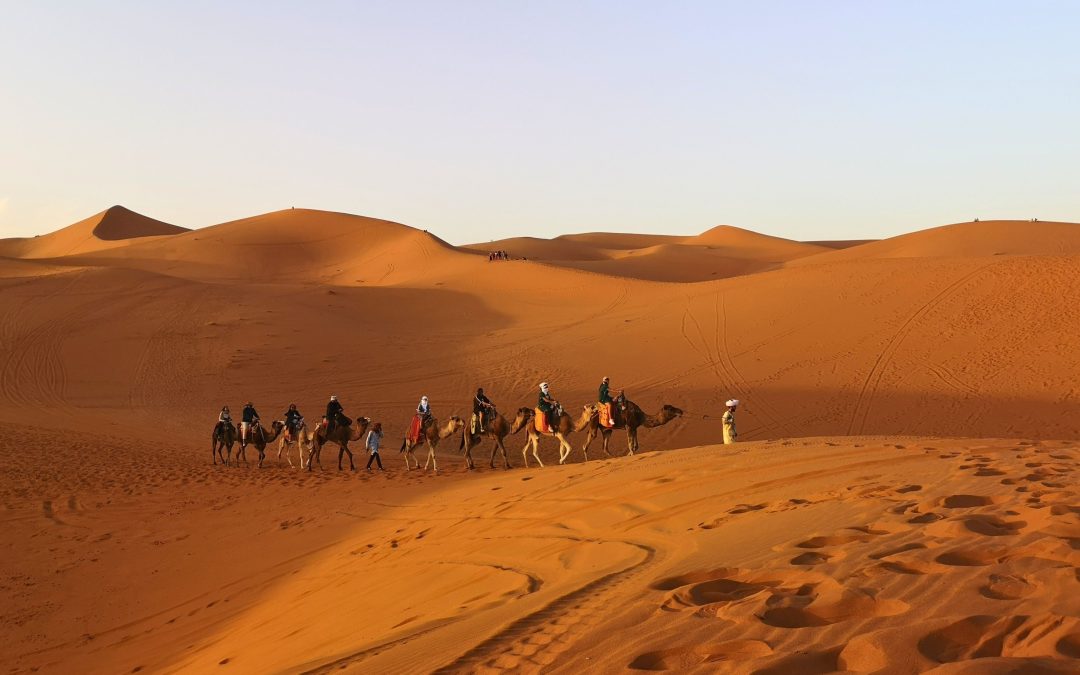
No discussion of Morocco’s outdoor landscapes is complete without the desert. The two main access points are Merzouga, near the Erg Chebbi dunes, and Zagora or M’Hamid, which lead toward the more remote Erg Chigaga dunes. Erg Chebbi is easier to reach and more developed, with a wider range of desert camps; Erg Chigaga requires a longer overland journey but rewards visitors with a quieter, more isolated dune landscape. Camel trekking at sunset, overnight stays in desert camps, and, increasingly, 4×4 or dune-buggy excursions are the standard ways to experience this part of the country.
Todra and Dadès Gorges
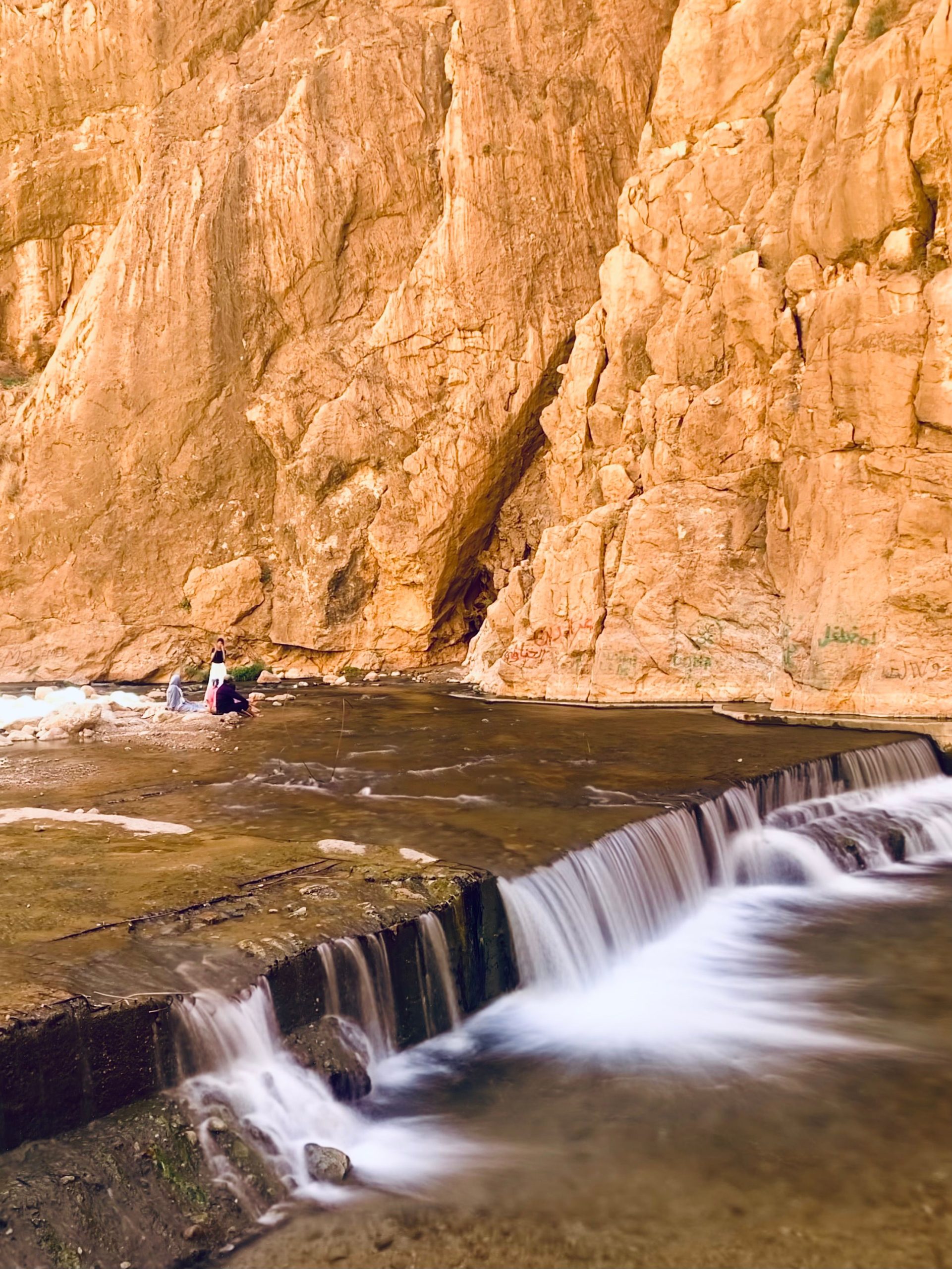
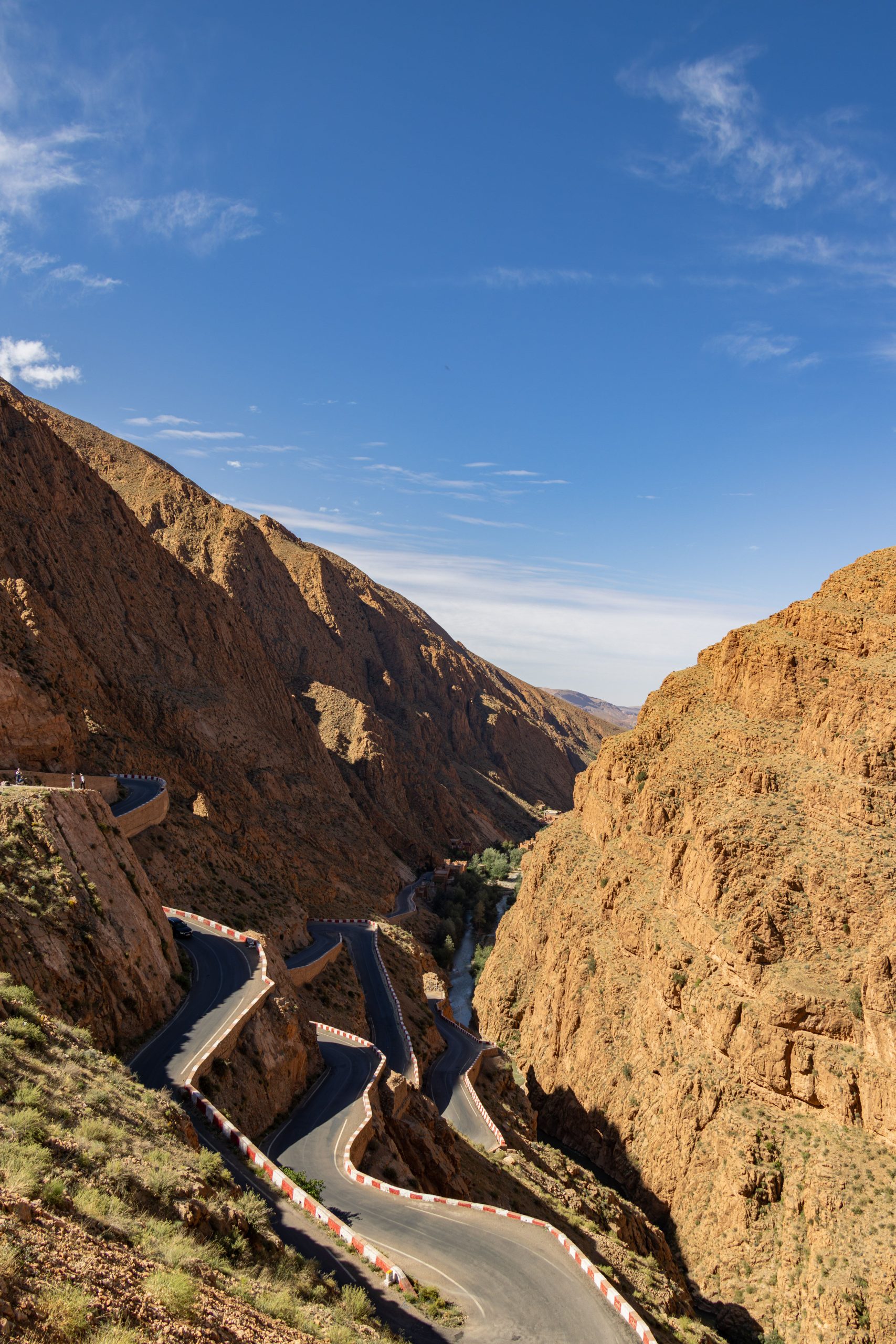
Between the Atlas Mountains and the Sahara, the Todra Gorge and Dadès Gorge cut dramatic canyons through the pre-Sahara plateau. Todra Gorge is particularly striking, with sheer rock walls rising up to 300 meters on either side of a narrow river-carved passage — a popular spot for both casual walkers and rock climbers, since the canyon has become a recognized climbing destination with hundreds of bolted routes. The Dadès Gorge, further west, is known for its winding road, layered rock formations, and the so-called “Monkey Fingers” rock formations near Boumalne Dadès.
Ifrane National Park and the Middle Atlas
Less visited by international travelers but well known within Morocco, Ifrane National Park in the Middle Atlas is defined by cedar forests, mountain lakes, and one of the best-known populations of Barbary macaques — the only monkey species native to North Africa. The town of Ifrane itself, sometimes nicknamed “Little Switzerland” for its alpine-style architecture, sits at over 1,600 meters and can see snowfall in winter, a contrast most visitors don’t expect from Morocco.
The Ourika Valley and Atlantic Coast
Closer to Marrakech, the Ourika Valley is a popular half-day or full-day outdoor destination, with waterfalls (the Setti Fatma falls being the best known), riverside walking paths, and small Amazigh villages. On the coast, areas around Essaouira and further south toward Taghazout have become established centers for surfing, kitesurfing, and coastal walking, offering an entirely different kind of outdoor experience shaped by the Atlantic swell rather than mountains or desert.
The Anti-Atlas and the Zagora Route
South of the High Atlas, the Anti-Atlas range offers a rockier, more arid alternative to the greener valleys further north. Jebel Sirwa, an extinct volcano rising to just over 3,300 meters, has become a favored destination for trekkers looking for a quieter alternative to the busier Toubkal circuit, with routes passing through remote Amazigh villages that see far fewer visitors. The road south from Ouarzazate toward Zagora is often used as the starting point for overland journeys into the desert, passing through the Draa Valley — the longest river valley in Morocco — lined with palm groves, kasbahs, and small oasis towns that offer a very different, slower-paced kind of outdoor travel compared to the more visited northern routes. For travelers starting from the south, our tours from Ouarzazate offer an easy way to access this route without arranging transport yourself.
Sample Multi-Day Route
For travelers who want to see several of these regions in one trip, a common overland route looks roughly like this: depart Marrakech and cross the High Atlas via the Tizi n’Tichka pass, stopping to explore kasbahs along the way; continue to the Dadès Gorge for a night among its rock formations; carry on to Todra Gorge for a morning walk or climb beneath its canyon walls; then head south to Merzouga for a night in the Sahara, including a camel trek to a desert camp. This kind of route typically takes three to four days and can be adjusted in either direction depending on how much time you have and whether you’d rather spend an extra night in the mountains or the desert. If you’d rather have the logistics handled for you, our 3-day Marrakech to Merzouga desert tour follows a similar route with a driver-guide included.
Things to Know Before You Go
Best time to visit. Spring (March to May) and autumn (September to November) are generally considered the best seasons for outdoor travel in Morocco. Mountain trekking is most comfortable in these shoulder seasons, since summer heat can be intense at lower elevations and winter brings snow and cold to the higher Atlas routes. The Sahara, by contrast, is best visited in autumn, winter, or early spring, since summer desert temperatures are extreme.
Altitude and fitness. Treks like Toubkal involve genuine altitude gain and require a reasonable level of fitness, though they don’t require technical climbing skills outside of winter conditions, when crampons and ice axes become necessary. Gorge walks and valley hikes are far more accessible and suitable for most fitness levels.
Guides and permits. Independent trekking is possible in some areas, but hiring a licensed local guide is strongly recommended for mountain routes, both for safety and because many guides are from the villages you’ll pass through, adding valuable local context. Some national park areas also require official guides by regulation.
What’s typically included or excluded. Guided day trips generally include transport and a guide, with meals and equipment sometimes included depending on the operator; multi-day treks usually include accommodation (refuges, guesthouses, or desert camps), meals, and mule or camel support for luggage. Always confirm exactly what’s covered before booking any outdoor experience or day trip.
Highlights and Activities
Beyond the well-known treks and camel rides, Morocco’s outdoor regions offer a wide range of activities worth knowing about:
- Rock climbing in the Todra Gorge, which has developed into one of North Africa’s most respected climbing destinations, with routes suited to both beginners and experienced climbers.
- Mountain biking through the Atlas foothills and Amazigh villages, an increasingly popular way to cover ground that would take much longer on foot.
- Canyoning in select High Atlas valleys, involving a mix of hiking, rappelling, and swimming through narrow river gorges.
- Stargazing in the Sahara, where minimal light pollution makes for some of the clearest night skies in North Africa.
- Village-to-village trekking, staying in local guesthouses (gîtes) rather than hotels, which offers a closer look at daily Amazigh mountain life.
- Birdwatching in areas like the Ourika Valley and along the Atlantic coast, both recognized stops for migratory species.
- Sandboarding on the dunes around Merzouga and Zagora, a lower-effort alternative to camel trekking that’s popular with families and younger travelers.
- Kasbah and ksar visits along desert routes, exploring the fortified earthen architecture that has historically protected Saharan trade routes and oasis settlements — a good way to pair cultural history with a day spent outdoors.
For travelers who want a well-rounded first experience without committing to a multi-day expedition, a guided day trip into the Atlas foothills is often the easiest way to sample this side of Morocco. You can explore a full range of guided outdoor experiences with xploremorocco.com to find an itinerary that matches your available time.
Practical Travel Tips
What to bring. Layered clothing is essential, since temperatures can shift dramatically between morning, midday, and evening — especially in the mountains and desert. Sturdy walking shoes or boots, a hat, sunscreen, and a reusable water bottle are recommended for nearly any outdoor day trip. For overnight desert trips, pack a warm layer for the evening, since temperatures drop sharply after sunset even when the daytime heat is intense.
Budgeting. Costs vary widely depending on whether you join a group day trip, book a private guide, or arrange a multi-day trek with full logistical support. As a general rule, group day trips are the most affordable option, while private, multi-day, or highly customized itineraries cost more due to guide fees, permits, and accommodation. It’s worth requesting a clear cost breakdown from any operator before booking.
Physical preparation. If you’re planning a mountain trek, especially toward Toubkal, some pre-trip cardiovascular preparation is genuinely useful, particularly if you’re not used to hiking at altitude. For gorge walks, valley hikes, and desert excursions, general fitness is usually sufficient.
Respecting local communities. Many of Morocco’s outdoor routes pass directly through inhabited villages. Dressing modestly, asking before photographing people, and supporting local guesthouses and guides all go a long way toward responsible travel in these areas.
Booking in advance. Popular multi-day treks, and desert camps during peak season (October–November and March–April), can fill up well ahead of time. If your trip dates are fixed, it’s worth securing your outdoor itinerary early rather than waiting until you arrive in Morocco.
Traveling sustainably. Water is scarce in much of Morocco’s mountain and desert terrain, so being mindful of usage — especially in gîtes and desert camps that rely on limited local supply — makes a real difference. Carrying a refillable bottle with a filter or purification tablets instead of buying multiple single-use plastic bottles is one of the simplest ways to reduce your footprint on multi-day treks. Choosing operators who employ local guides, muleteers, and camp staff also helps ensure that outdoor tourism benefits the communities whose land you’re passing through.
FAQ's about outdoor adventures Morocco
Do I need to be an experienced hiker to enjoy outdoor activities in Morocco?
No. While routes like the Toubkal summit trek require reasonable fitness and some hiking experience, the vast majority of outdoor experiences in Morocco — valley walks, gorge visits, desert excursions, and village day trips — are accessible to travelers with little or no hiking background.
Is it safe to explore Morocco's mountains and desert independently?
Independent travel is possible in some areas, but hiring a licensed local guide is recommended for mountain treks and remote desert routes, both for safety and because trail conditions, weather, and regulations can change. Guides also provide valuable cultural and historical context that’s easy to miss traveling alone.
What is the best season for a Sahara Desert trip versus a mountain trek?
Broadly, autumn through spring (roughly October to April) works well for the Sahara, avoiding the extreme summer heat, while the Atlas Mountains are most comfortable in spring and autumn, with winter bringing snow to higher elevations. If your trip spans both regions, shoulder-season travel (spring or autumn) tends to work best for combining the two.
Can I combine a mountain trek and a desert trip in one visit?
Yes, and it’s one of the most popular ways to experience Morocco’s outdoor landscapes. A common route runs from Marrakech across the High Atlas via the Tizi n’Tichka pass, through the Dadès and Todra Gorges, and on to Merzouga for the Sahara — typically arranged as a multi-day loop.
How difficult is the trek to Jebel Toubkal?
It’s considered a non-technical but physically demanding trek, usually completed over two days with an overnight stay near base camp. No climbing experience is required outside of winter conditions, but a reasonable fitness level and some acclimatization to altitude make a significant difference in enjoying the climb.
Will I have phone signal or Wi-Fi during outdoor trips in Morocco?
It varies considerably by region. Towns like Imlil, Merzouga, and Ouarzazate generally have reliable mobile coverage, and many gîtes and desert camps offer at least basic Wi-Fi. However, once you’re higher into the mountains or deeper into remote valleys, signal can become patchy or disappear entirely, so it’s worth telling someone your general route and expected return time before setting out on a multi-day trek.
Morocco’s outdoor landscapes — from the High Atlas peaks to the Sahara dunes and the canyons in between — offer some of the most varied nature-based travel in North Africa, all within reach of a single trip. Whether you’re drawn to a challenging summit trek, a relaxed valley walk past waterfalls, or a night under Sahara stars, there’s a route suited to nearly every interest and fitness level. The most important step is planning ahead: choosing the right season, understanding what each region actually offers, and deciding how much guided support you want along the way.
If you’re ready to turn this guide into an itinerary, book this day trip with xploremorocco.com and let a local team handle the logistics while you focus on the experience itself.