
Why Is Friday Couscous Day in Morocco? The Tradition Explained
If you spend enough time in Morocco, you may notice something interesting about Fridays: the country seems to slow down around lunchtime, families gather at home, and one dish appears on tables across the country — couscous.
For travelers, the tradition can seem surprising. Couscous is one of Morocco’s most famous foods, so it is easy to assume that Moroccans eat it every day. In reality, traditional couscous is often associated especially strongly with Friday, when the meal becomes much more than food. It is connected with family, hospitality, community, religious rhythms, and centuries-old culinary knowledge.
So, why is Friday couscous day in Morocco?
The answer is a combination of Morocco’s Friday social rhythm and the cultural importance of couscous. Friday is the day of the weekly congregational prayer, and traditionally it has also been a time for families to come together. Couscous, with its communal presentation and relatively long preparation process, fits naturally into this weekly gathering.
The tradition is not an absolute rule. Not every Moroccan family eats couscous every Friday, and customs vary between regions, households, and generations. But the association is strong enough that asking a Moroccan about Friday lunch will very often bring couscous to mind.
For travelers, understanding this tradition offers a fascinating glimpse into Moroccan life beyond the famous medinas, palaces, and desert landscapes.
Why Is Friday Couscous Day in Morocco?
The tradition of Friday couscous in Morocco is closely connected to the importance of Friday in Moroccan society.
Friday, known as the day of Jumu’ah, has a special place in the Islamic week. The midday congregational prayer brings communities together at mosques, creating a natural pause in the normal rhythm of work and daily life.
After the prayer, families traditionally gather for lunch. Couscous became closely associated with this meal because it is ideal for sharing. It is usually prepared in a large quantity and served on a communal platter, making it particularly suited to a family gathering.
The meal therefore represents several things at once:
- Family togetherness
- Hospitality
- Sharing
- Community
- Traditional Moroccan cooking
- A weekly moment of connection
UNESCO recognizes the knowledge and practices surrounding couscous as intangible cultural heritage. The tradition covers not only the finished dish but also the preparation techniques, tools, ingredients, social practices, and knowledge passed between generations.
This is one reason couscous should not be viewed simply as a Moroccan “dish.” It is part of a much wider cultural tradition shared across North Africa.
What Makes Friday Special in Morocco?
To understand the tradition, it helps to understand the rhythm of Friday itself.
The weekly Friday prayer
Friday is associated with the important congregational prayer held around midday. In many communities, this creates a noticeable change in the normal pace of the day.
Some shops and businesses may close temporarily around prayer time, particularly in more traditional neighborhoods. Streets can become quieter, and people head toward mosques before returning home.
The exact schedule varies by city, season, workplace, and individual business, so travelers should not assume that everything in Morocco closes for the entire day.
Instead, think of Friday as a day with a particularly strong midday pause.
Family lunch after prayer
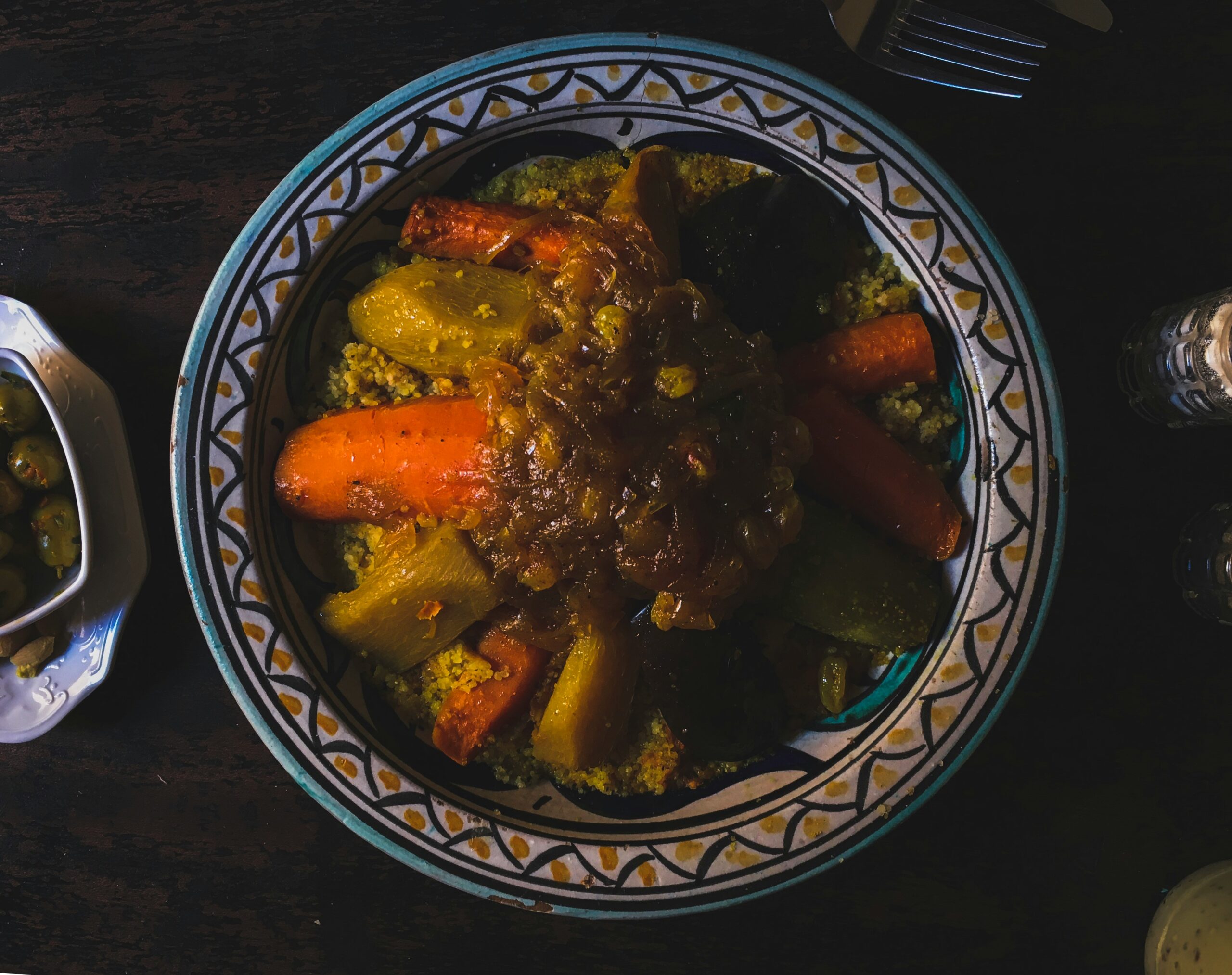
Traditionally, the Friday meal provides an opportunity for relatives to sit together after the midday prayer.
This is where couscous becomes especially meaningful.
Rather than preparing a quick individual meal, a family may prepare a large couscous dish that everyone can share. The food is placed in the center of the table, and family members eat together.
For many Moroccans, this weekly meal is about spending time together as much as it is about eating.
Why Couscous Is Perfect for a Family Meal
Couscous has several characteristics that make it particularly suitable for Friday gatherings.
Traditional preparation takes time. The semolina is prepared, worked, steamed and combined with a flavorful broth and other ingredients. UNESCO describes couscous preparation as a process involving several operations, with techniques traditionally transmitted through observation and practice.
It is also naturally designed for sharing.
A large platter can accommodate an entire family, with couscous forming the base and vegetables, meat, or other ingredients arranged on top. Everyone gathers around the same dish.
This communal format reflects the social meaning of couscous particularly well.
It is not simply:
“Here is your portion.”
Instead, it is:
“Let’s sit together and share.”
That difference is important when experiencing Moroccan food culture.
What Is Traditionally Served With Moroccan Couscous?
There is no single universal recipe for Moroccan couscous.
The ingredients vary depending on the region, season, family traditions, and occasion. UNESCO notes that couscous may be accompanied by different vegetables and meats depending on the region, season, and circumstances.
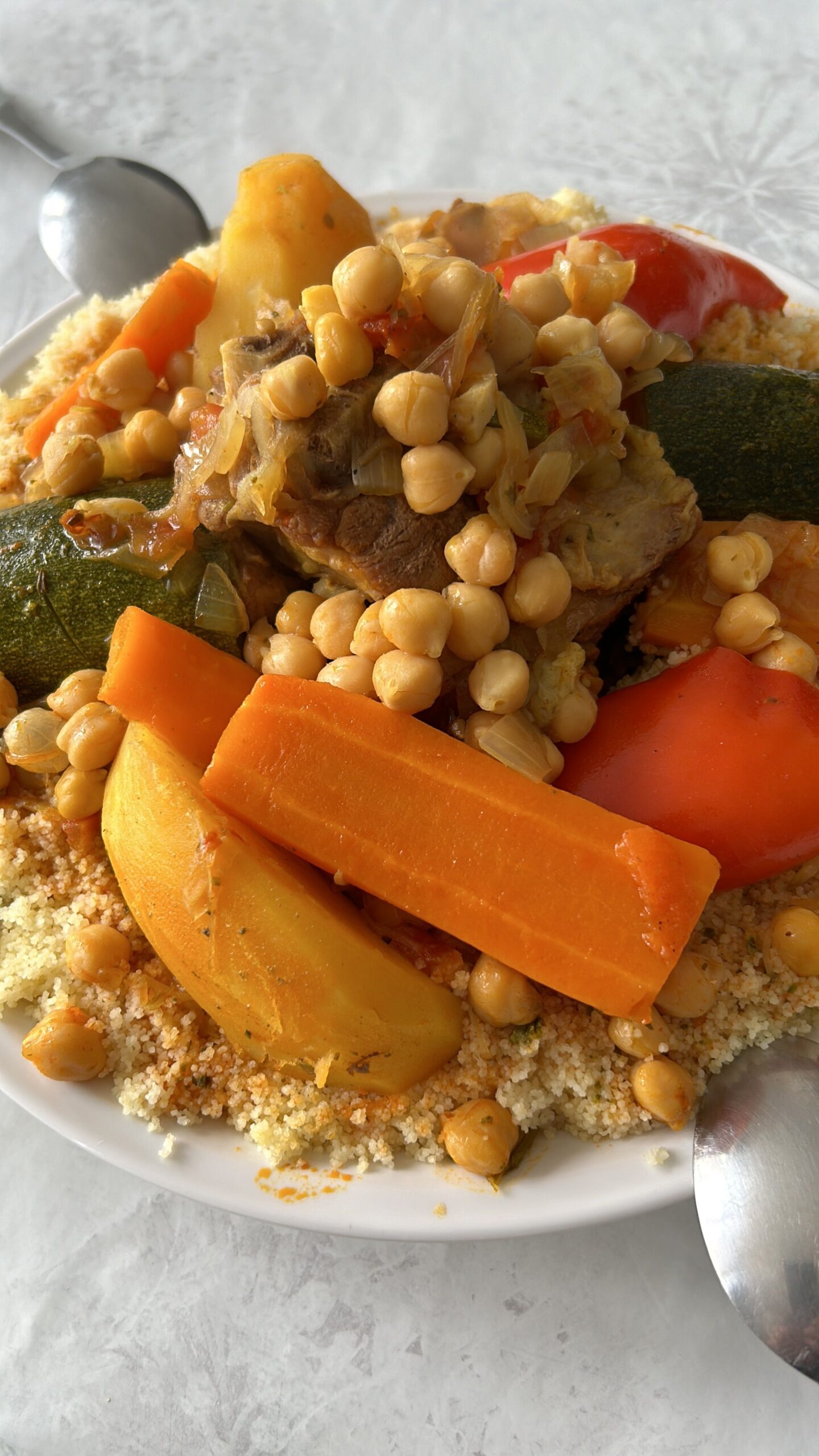
A traditional Moroccan couscous platter may include:
- Steamed semolina couscous
- Carrots
- Turnips
- Zucchini
- Pumpkin or squash
- Cabbage
- Chickpeas
- Onions
- Meat such as chicken, beef, or lamb
- A rich vegetable or meat broth
One preparation travelers may encounter is couscous with seven vegetables. The number seven is strongly associated with the classic Friday presentation in some Moroccan households, although recipes and customs differ.
The vegetables are generally arranged carefully over the couscous, creating a large and colorful centerpiece.
In some homes, raisins and caramelized onions may also be served, adding sweetness to the dish.
The important point is that Moroccan couscous is regional and personal. Two families can prepare Friday couscous differently while both considering their version completely traditional.
How Is Traditional Moroccan Couscous Prepared?
If you have only eaten instant couscous, traditional Moroccan couscous can be a completely different experience.
The grains are traditionally steamed rather than simply covered with hot water.
A special pot called a couscoussier or keskas is used. The lower section holds the simmering broth while the upper section allows the couscous grains to steam.
Traditional preparation can involve several stages of steaming and working the grains.
The process takes time, which is one reason Friday is such a natural occasion for it. A family can begin preparations earlier in the day, allowing the meal to be ready around lunchtime.
This slow preparation is part of the cultural experience.
Couscous is not designed to be rushed.
The techniques and knowledge involved in preparing it have been passed down through generations. UNESCO specifically recognizes the skills, tools, preparation methods, and social practices connected with couscous production and consumption.
Is Couscous Eaten Only on Fridays in Morocco?
No.
This is one of the most important things travelers should understand.
Although Friday couscous in Morocco is a strong cultural tradition, couscous is not exclusively a Friday food.
Moroccan families can eat couscous on other days, particularly for celebrations, family gatherings, special occasions, or simply because they want it.
The Friday association is better understood as a cultural custom rather than a strict national rule.
Modern Moroccan life has also changed eating habits. Work schedules, school, urban lifestyles, restaurants, and changing family routines all influence when people prepare traditional dishes.
Some families continue the Friday tradition very closely. Others prepare couscous less frequently.
Both are part of contemporary Moroccan life.
Do Moroccan Restaurants Serve Couscous on Friday?
Travelers may notice that some Moroccan restaurants offer couscous particularly prominently on Fridays.
This is one of the easiest ways for visitors to experience the tradition without being invited into a private home.
However, restaurant practices vary considerably.
Some restaurants may serve couscous every day, while others prepare it especially for Friday lunch. Smaller traditional restaurants may have limited quantities because preparation is labor-intensive.
If tasting couscous is high on your Morocco itinerary, Friday can be a particularly good day to look for it.
A useful travel tip
Ask your accommodation host or a local guide where they would personally recommend eating couscous.
A riad host, guide, or local resident may know a small neighborhood restaurant that offers a more traditional experience than a tourist-oriented establishment.
And if you receive an invitation to a Moroccan home for Friday lunch, consider it a special cultural experience. Follow your host’s lead regarding where to sit, how the food is served, and how to eat.
How Do Moroccans Eat Couscous?
Traditionally, couscous is often served from a large communal platter.
Family members sit around the dish and eat together.
If you are invited to participate, there is no need to worry about getting everything perfect. Your host will usually make the experience comfortable.
A few basic etiquette tips can help:
- Wash your hands before the meal if your host provides a basin or directs you to the bathroom.
- Wait until everyone is ready before beginning.
- Follow your host’s example when eating.
- If the meal is communal, generally eat from the area directly in front of you.
- Take reasonable portions rather than reaching across the entire platter.
- Accept food graciously, but politely decline if you are genuinely full.
- Complimenting the meal is always appreciated.
Bread may also be present at Moroccan meals, but couscous itself is usually eaten with a spoon or by hand depending on the household and setting.
Don’t worry if your host uses a different style. Moroccan hospitality is generally more important than strict table rules.
Discover More from Marrakesh
Discover our best private tours from Marrakech, carefully designed to showcase Morocco’s imperial cities, the spectacular Sahara Desert, the Atlas Mountains, and picturesque coastal towns.
What Should Travelers Expect on a Friday in Morocco?
Friday can feel different depending on where you are traveling.
In Marrakech, Fes, Casablanca, Tangier, Agadir, or other major cities, many tourist attractions and businesses continue operating, although opening hours can vary.
In smaller towns and more traditional neighborhoods, the Friday rhythm may be more noticeable.
For travelers, the biggest practical lesson is to avoid scheduling everything too tightly around Friday lunchtime.
If you have a private guide, driver, or tour, confirm the day’s schedule in advance.
For example, if you are planning a cultural tour from Marrakech, you can combine the city’s historic sights with a food-focused experience and leave enough flexibility around lunchtime. Xplore Morocco’s private tours from Marrakech can also be adapted around travelers’ interests and schedules.
Similarly, visitors beginning their journey in Fes can explore private tours from Fes while allowing time to experience the city’s food culture and traditional neighborhoods.
Where Can You Experience Moroccan Food Culture?
Couscous is only one part of Morocco’s culinary identity.
Food is deeply connected to geography and local traditions. A meal in Fes may feel different from one in Marrakech, while coastal cities such as Essaouira and Agadir have their own seafood traditions.
For travelers interested in food, exploring different regions can be one of the best ways to understand Morocco.
Marrakech
Marrakech is an excellent starting point for travelers who want to combine traditional cuisine with historic neighborhoods, souks, gardens, and cultural attractions.
You can explore the medina, visit local food markets, and ask your guide about traditional Moroccan dishes beyond couscous.
Fes
Fes has a particularly rich culinary heritage and is an excellent destination for travelers interested in traditional Moroccan cooking.
Its historic medina is filled with food stalls, bakeries, spice sellers, restaurants, and small local establishments.
A private itinerary through Fes can be especially useful if food is one of your main interests because a local guide can explain what you are seeing rather than simply taking you from attraction to attraction.
Casablanca
Casablanca offers a more modern urban atmosphere while still providing plenty of opportunities to discover Moroccan cuisine.
If Casablanca is your arrival point, you can use the city as the beginning of a wider itinerary through Morocco. Xplore Morocco’s tours from Casablanca provide options for travelers who want to continue beyond the city.
Agadir and southern Morocco
Agadir and the surrounding Souss region offer a different culinary perspective, influenced by Amazigh traditions and the Atlantic coast.
Travelers interested in local food can combine a coastal itinerary with visits to markets and smaller communities.
Xplore Morocco also offers private tours from Agadir for visitors who want to explore beyond the resort areas.
Is Friday Couscous a Religious Tradition?
It is important to make a distinction here.
Friday itself has religious significance in Islam because of the weekly congregational prayer. Couscous, however, is not a religious obligation.
There is no requirement in Islam that Muslims eat couscous on Friday.
Instead, the Friday couscous tradition developed as a cultural practice around the social rhythm of the day.
This distinction matters because travelers sometimes assume that every Moroccan custom connected with Friday is a religious rule.
The reality is more nuanced.
Religion, family traditions, regional customs, agriculture, food preparation, and social life have interacted over generations to create the Friday meal tradition.
That combination is what makes it so interesting.
Why Couscous Matters to Moroccan Identity
Couscous has become one of the best-known symbols of North African food culture, but its importance goes much deeper than its popularity among international travelers.
The knowledge involved in preparing couscous has historically been transmitted within families and communities.
It includes:
- Selecting and preparing grains
- Rolling semolina
- Steaming the couscous
- Preparing the accompanying broth
- Selecting seasonal vegetables
- Arranging the finished platter
- Sharing the meal with family and guests
UNESCO’s recognition of couscous emphasizes precisely this broader cultural dimension, describing it as a food associated with solidarity, conviviality, sharing, and togetherness.
That makes Friday lunch a valuable window into Moroccan culture.
When you see a family sitting around a large couscous platter, you are not simply watching people eat a famous Moroccan dish. You are seeing a social tradition that connects food with family and community.
Can Tourists Experience a Traditional Friday Couscous?
Yes, but the best approach is to be respectful rather than treating the tradition as a tourist performance.
A restaurant is the easiest option.
A cooking class or food experience can provide another opportunity to learn how couscous is prepared.
The most personal experience is being invited to someone’s home. If this happens, treat the invitation as genuine hospitality rather than an attraction.
Don’t assume that every Moroccan family wants visitors photographing their meal or kitchen. Ask before taking photos, especially when people are present.
You should also avoid treating the meal as a checklist item.
The real value of experiencing Friday couscous is understanding why the meal matters to the people sharing it.
Tips for Travelers Visiting Morocco on a Friday
If your Morocco trip includes a Friday, keep these practical points in mind:
Plan around lunchtime
Allow extra flexibility around the midday prayer and Friday lunch, especially in smaller towns.
Don’t assume everything is closed
Tourist areas, hotels, transport services, and attractions may continue operating, but individual opening hours can vary.
Ask locally
Your hotel, riad, guide, or driver can tell you what is happening in the neighborhood that day.
Try couscous when it is freshest
If you specifically want traditional Moroccan couscous, Friday lunch can be an excellent opportunity.
Respect the religious context
Remember that Friday prayer is an important part of the day. Dress respectfully around mosques and avoid photographing worshippers in an intrusive way.
Leave room for spontaneity
Some of the best Moroccan food experiences happen when a local recommendation changes your original plan.
Friday Couscous vs. Other Famous Moroccan Dishes
Travelers often arrive in Morocco expecting tagine to be the country’s everyday signature dish.
Tagine is certainly one of Morocco’s most recognizable foods, but couscous occupies a different cultural position.
Tagine is a slow-cooked dish prepared in the distinctive cone-shaped vessel of the same name. It comes in countless combinations, including chicken with preserved lemon and olives, lamb with prunes, and vegetable versions.
Couscous, by contrast, is built around steamed semolina and is particularly associated with communal meals and family gatherings.
Other Moroccan foods worth trying include:
- Harira soup
- Pastilla
- Moroccan salads
- Msemen
- Baghrir
- Maakouda
- Grilled meats
- Fresh seafood along the Atlantic coast
- Mint tea and Moroccan pastries
If food is one of your main reasons for visiting Morocco, don’t stop after trying couscous once. Regional differences are part of the fun.
A Friday Meal Can Tell You a Lot About Morocco
One of the most rewarding aspects of travel is discovering that ordinary routines can reveal more about a country than famous monuments.
A Friday couscous meal is a perfect example.
There is no grand ceremony that every visitor needs to attend. Instead, the tradition exists in homes, neighborhood restaurants, family kitchens, and communities across Morocco.
It shows how food can become part of a weekly social rhythm.
It also explains why Moroccan hospitality is so strongly associated with sharing meals. Food is often a way of welcoming people, strengthening family relationships, and maintaining traditions.
If you are planning a longer Morocco itinerary, you can combine culinary experiences with historic cities and landscapes. Travelers starting in Marrakech can continue toward the Atlas Mountains and Sahara, while those arriving in Tangier can explore northern Morocco before heading south. Xplore Morocco’s private tours from Tangier are one option for building a more flexible route.
For travelers interested in the desert as well as Moroccan culture, a multi-day journey can also combine traditional meals with landscapes and local communities. Xplore Morocco’s Private Marrakech to Fes Desert Tour is one example of a route connecting Marrakech, Ait Ben Haddou, the Dades region, Todra Gorge, Merzouga, and Fes.
FAQ: Friday Couscous in Morocco
Why do Moroccans eat couscous on Friday?
Friday is associated with the weekly congregational prayer and family gatherings. Couscous became traditionally associated with the Friday family lunch because it is a communal dish that can be prepared in large quantities and shared around one platter.
Is Friday couscous a religious requirement?
No. Eating couscous on Friday is a cultural tradition, not an Islamic religious obligation. Friday has religious significance because of the weekly congregational prayer, while couscous is a traditional food associated with the social side of the day.
Do Moroccans eat couscous only on Friday?
No. Couscous can be eaten on other days and is also prepared for celebrations, family gatherings, and special occasions. Friday is simply the day with the strongest traditional association.
What is usually served with Moroccan couscous?
Traditional couscous may be served with seasonal vegetables such as carrots, turnips, zucchini, pumpkin, cabbage, and chickpeas, together with meat and a flavorful broth. Recipes differ significantly between regions and families.
Can tourists try traditional Friday couscous?
Yes. Travelers can look for restaurants serving couscous on Friday or ask their accommodation hosts and local guides for recommendations. If invited into a Moroccan home, accept the hospitality respectfully and follow the family’s customs.
So, why is Friday couscous day in Morocco?
Because Friday brings together several important parts of Moroccan life: the weekly prayer, family time, hospitality, traditional cooking, and the importance of sharing food.
Couscous is particularly suited to this tradition because it is prepared slowly, served communally, and carries generations of culinary knowledge. UNESCO’s recognition of couscous as intangible cultural heritage reflects how much more the tradition represents than a simple recipe.
For travelers, Friday is therefore a great opportunity to look beyond Morocco’s famous sights and experience an everyday cultural tradition. If you happen to be in Morocco on a Friday, ask a local where they recommend trying couscous, slow down around lunchtime, and pay attention to the rhythm of the city.
Have you ever tried authentic Moroccan couscous on a Friday, or would you like to experience this tradition on your next trip to Morocco? Tell us about your experience in the comments!